Fiebing’s Antique Finish is a specialized paste designed to create a deep two-tone patina that gives leather products a well-defined antique look.
● In stock
from 12,33 € / pc
Prices include 21% VAT. More about VAT and customs fees.
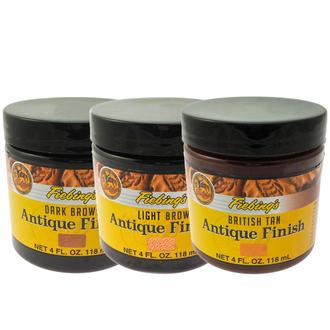
Fiebing’s Antique Finish is a specialized paste designed to create a deep two-tone patina that gives leather products a well-defined antique look.
● In stock
from 12,33 € / pc
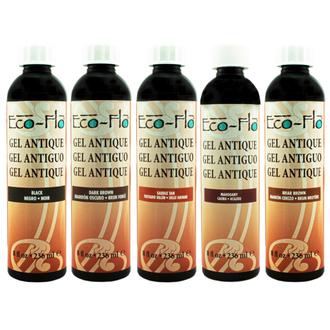
Eco-Flo Gel Antique is a thick, water-based gel dye designed to create a patina and antique look on vegetable-tanned leather.
● In stock
from 9,86 € / pc
Snappy advises
Gel dyes are thick antiquing dyes for surface patina on leather. Thanks to their gel consistency they don't run or soak in quickly like alcohol dyes, so you have time to work with them. They shine most on tooled leather: the gel flows into the impressions left by stamps and carving, you wipe it off the raised areas, and a contrasting patina emerges that highlights every detail of the pattern. On smooth leather it creates an even, slightly shaded tone.
We stock Fiebing's Antique Finish (118 ml) and Eco-Flo Gel Antique (236 ml). The shades cover the classic saddlery range: black, tan and saddle tan, medium to dark brown, mahogany, cherry, Sheridan brown and neutral for subtle shading.
Not sure about the shade? Screens distort colours. Our online colour chart shows real photos of dyed leather for all shades, patinas and dyes in stock. Treat the chart as a guide. The final shade always depends on the leather type, tanning method and the specific batch.
Gel Based Dyes: what the parameters mean and how to choose the right values.
Gel Based Dyes: Pavla's hands-on view – what caught her attention and what to watch out for when making and choosing.

I use Eco-Flo Gel Antique for patinating collars and belts made from vegetable-tanned cowhide decorated with stamps. I first treat the leather with Pro Resist, otherwise the gel grabs the flat areas too and the patina looks dirty instead of contrasting. Then I apply the gel with a sponge over the whole surface, let it sit for a minute and wipe it off the raised spots with a rag. It stays dark in the impressions and the pattern pops immediately.
Compared to alcohol dye I have time, the gel doesn't dry within seconds, so the wiping can be corrected. Once done I coat it with a finisher, the gel alone isn't abrasion resistant. On smooth undecorated leather I'd reach for alcohol dyes, there the gel has nothing to highlight.

 Hardware, leather and tools under one roof. Fewer gaps on the shelf, more time at the bench.
 37 years in business, 101,522 customers and more lessons than fit in a catalog.
 Choose the quantity first. We show pack and carton prices, plus any order-value discount, before checkout.