Leather guide
Learn to read leather names and choose the right leather for your project. Short lessons, no memorising.
Course: leather step by step
8 short lessons. Start wherever you like.
Lesson 1 · Hide or leather?
Lesson 1 · Hide or leather?
Getting started
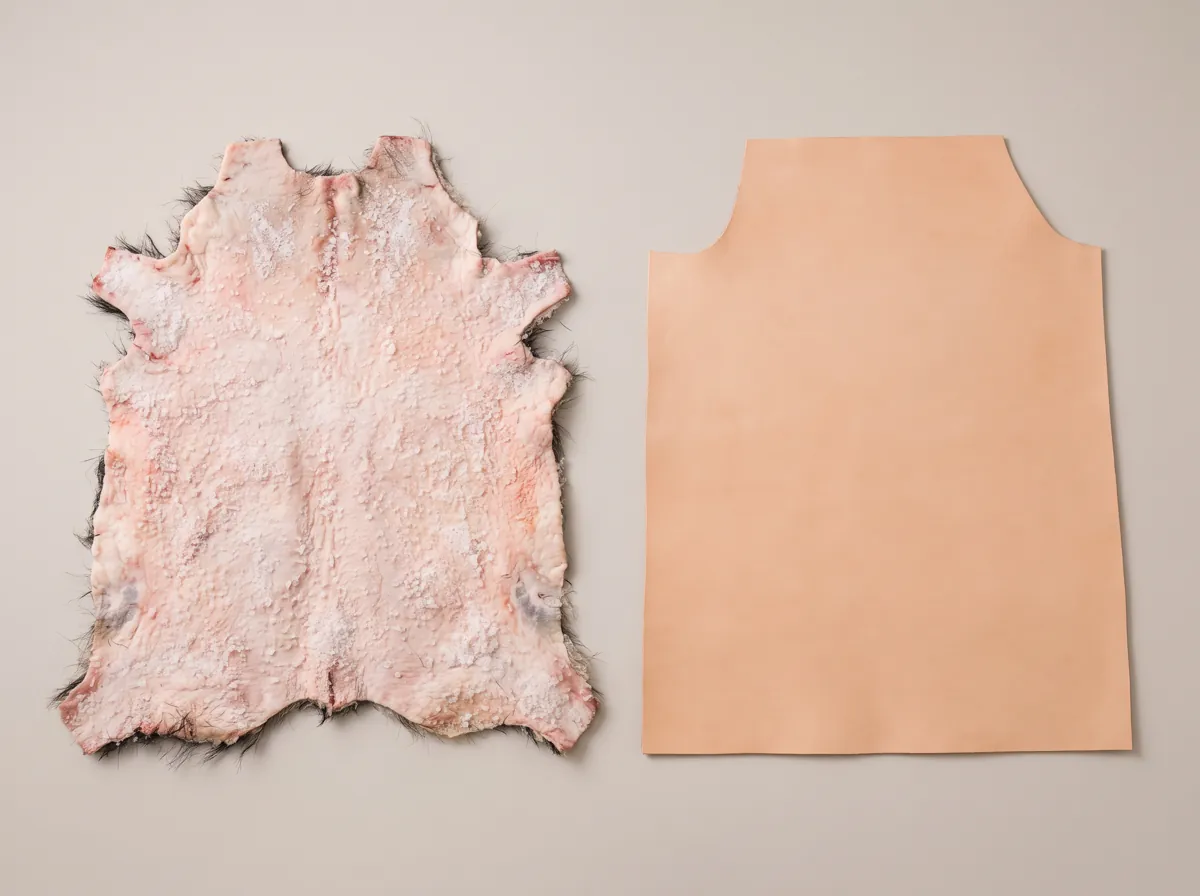
Hide and leather are not the same thing
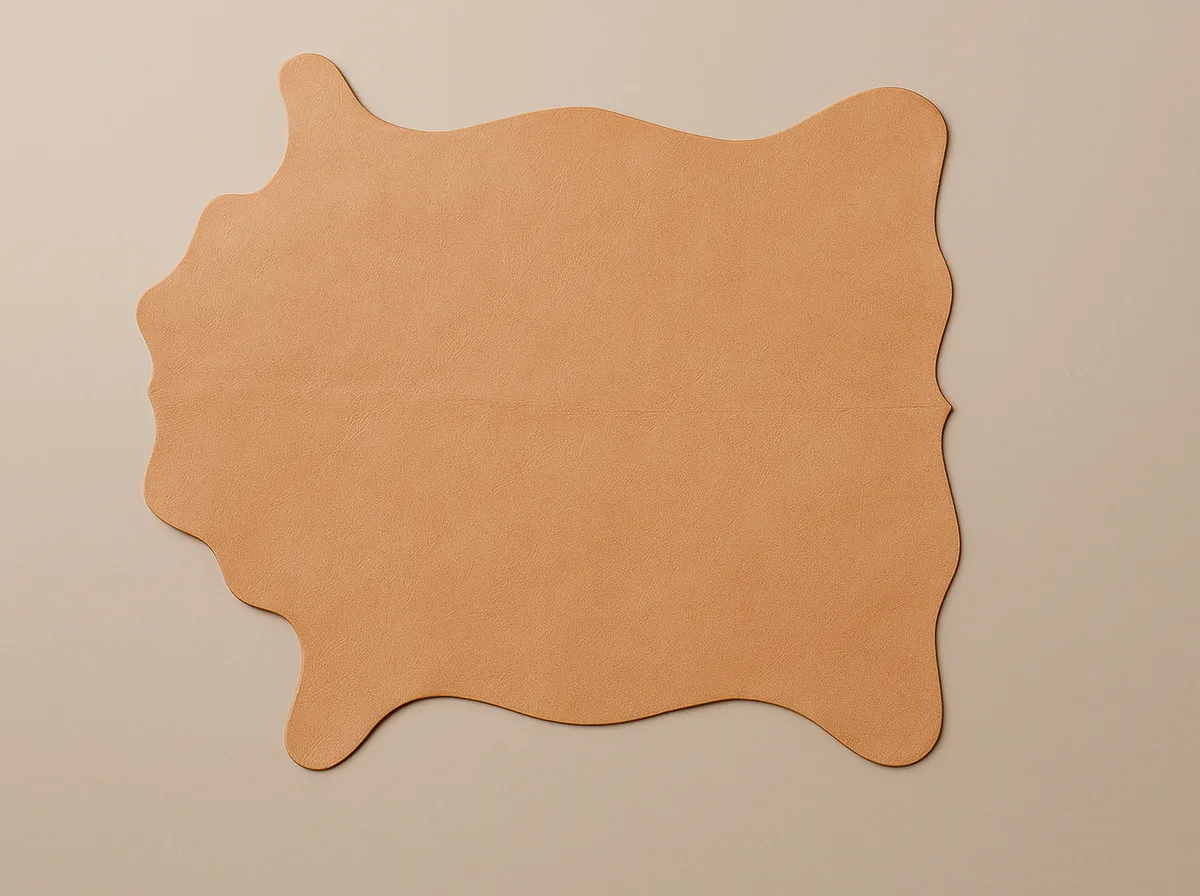
Hide is raw, just as it comes from the animal. Leather is hide that has gone through tanning.
That is why we say leather in the course and in the shop.
Explore
Tap both hide and leather
What happens to hide if nobody tans it?
Hide (raw)
It comes from the animal. It dries out quickly, cracks and rots when damp.
Leather
Hide after tanning. It is supple, flexible and strong. Collars, belts and wallets are sewn from leather.
How it is made
How a hide becomes leather
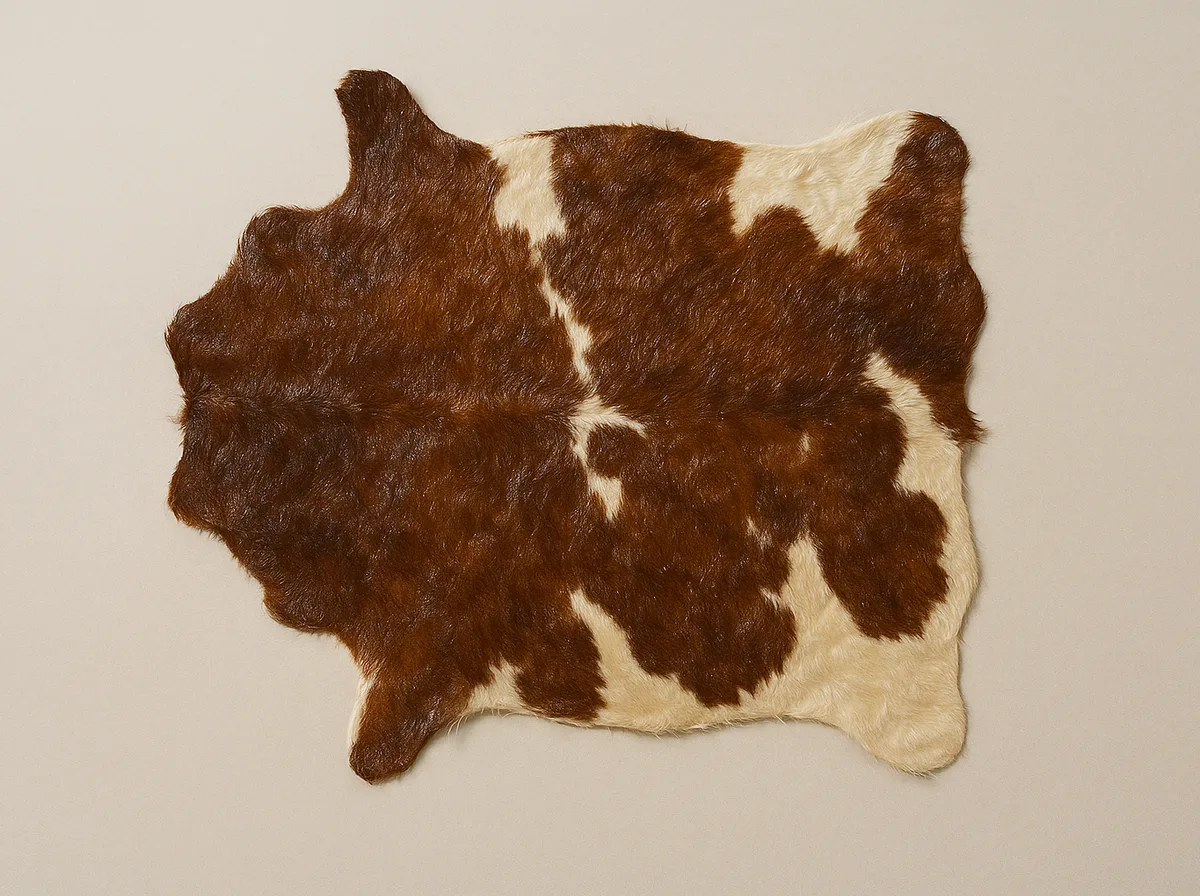
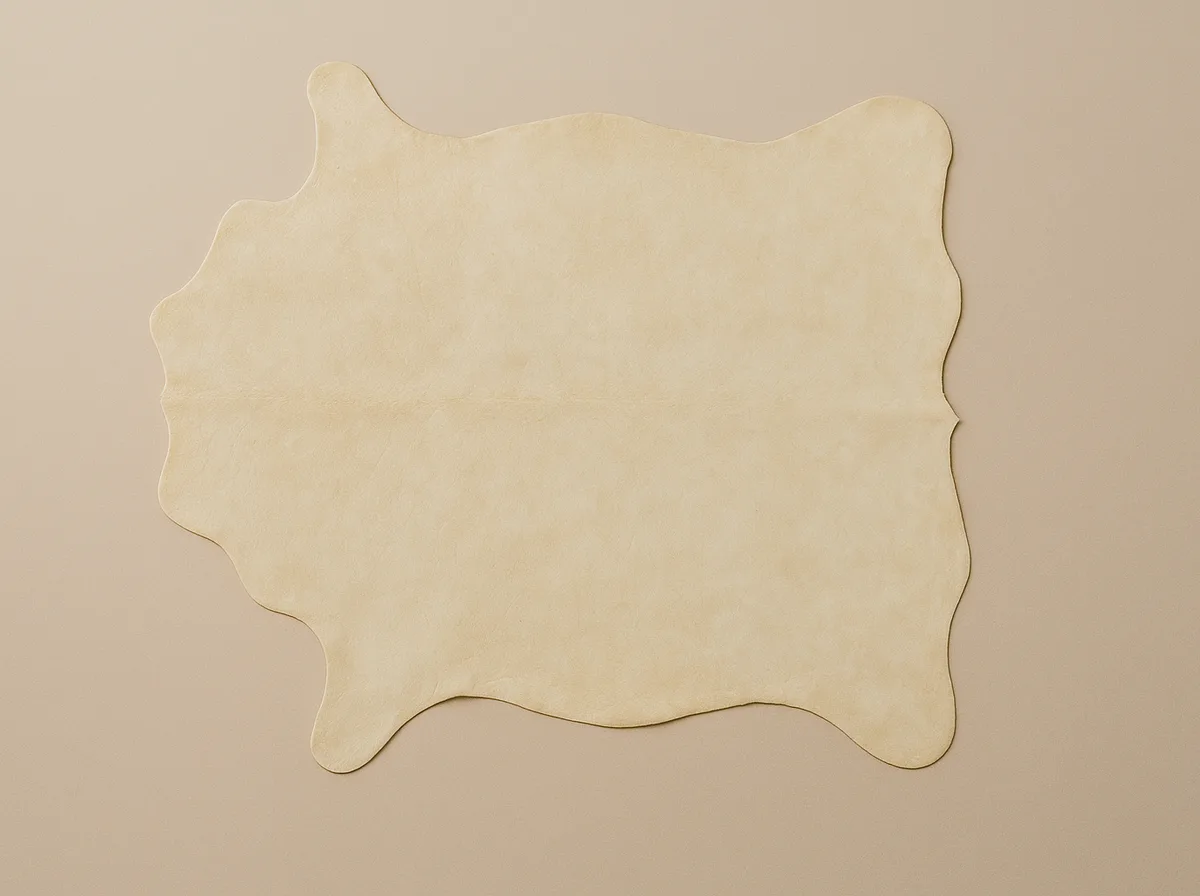
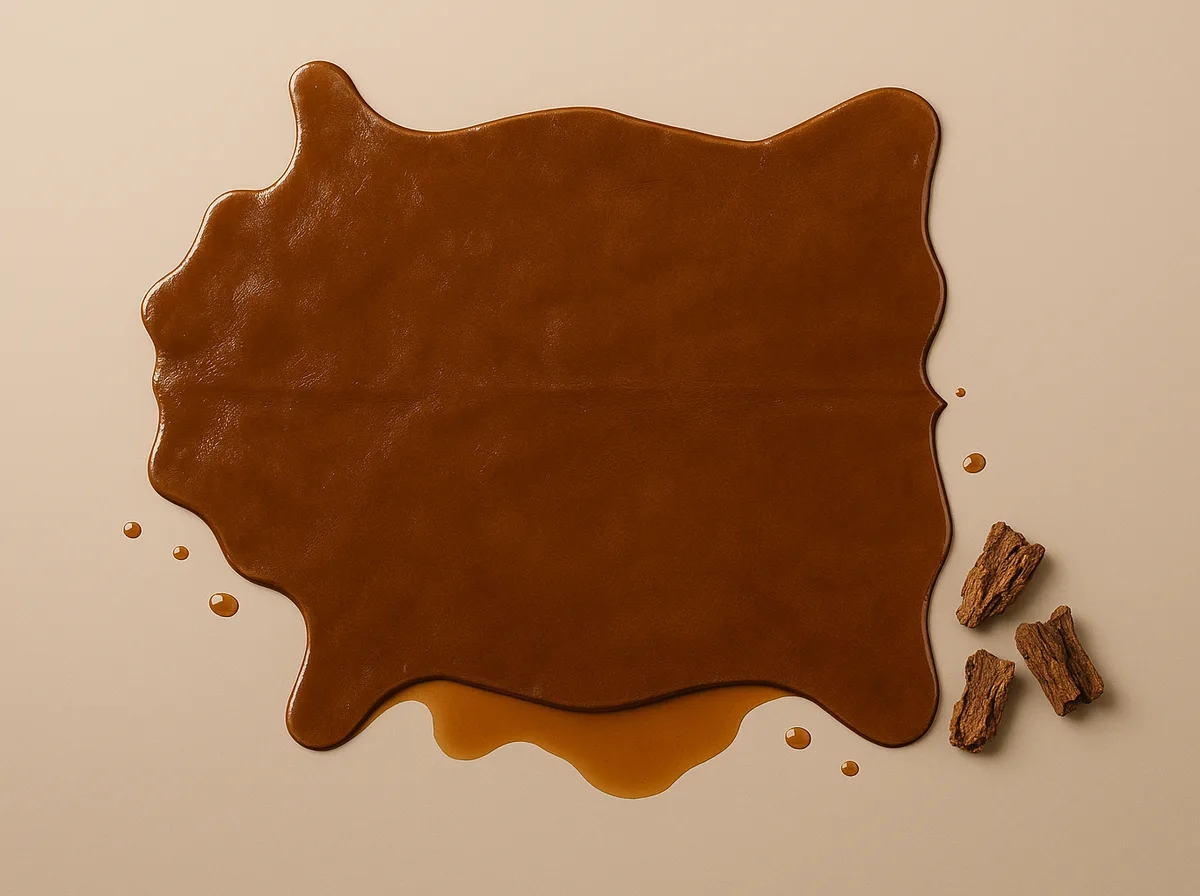
The hair comes off, the hide soaks in a tanning liquor and dries. What comes out is leather: it no longer rots and stays supple.
Fill in the word
What goes in the gap?
Hide that has gone through tanning is called ______.
Choose
In the shop you are buying a strap for a collar. Is it hide or leather?
True or myth?
“Hide and leather are the same thing.”
Done
Remember
Hide is raw, from the animal. Leather is hide after tanning. Everything you learn from here on is about leather.
Lesson 2 · Grain and split leather
Getting started
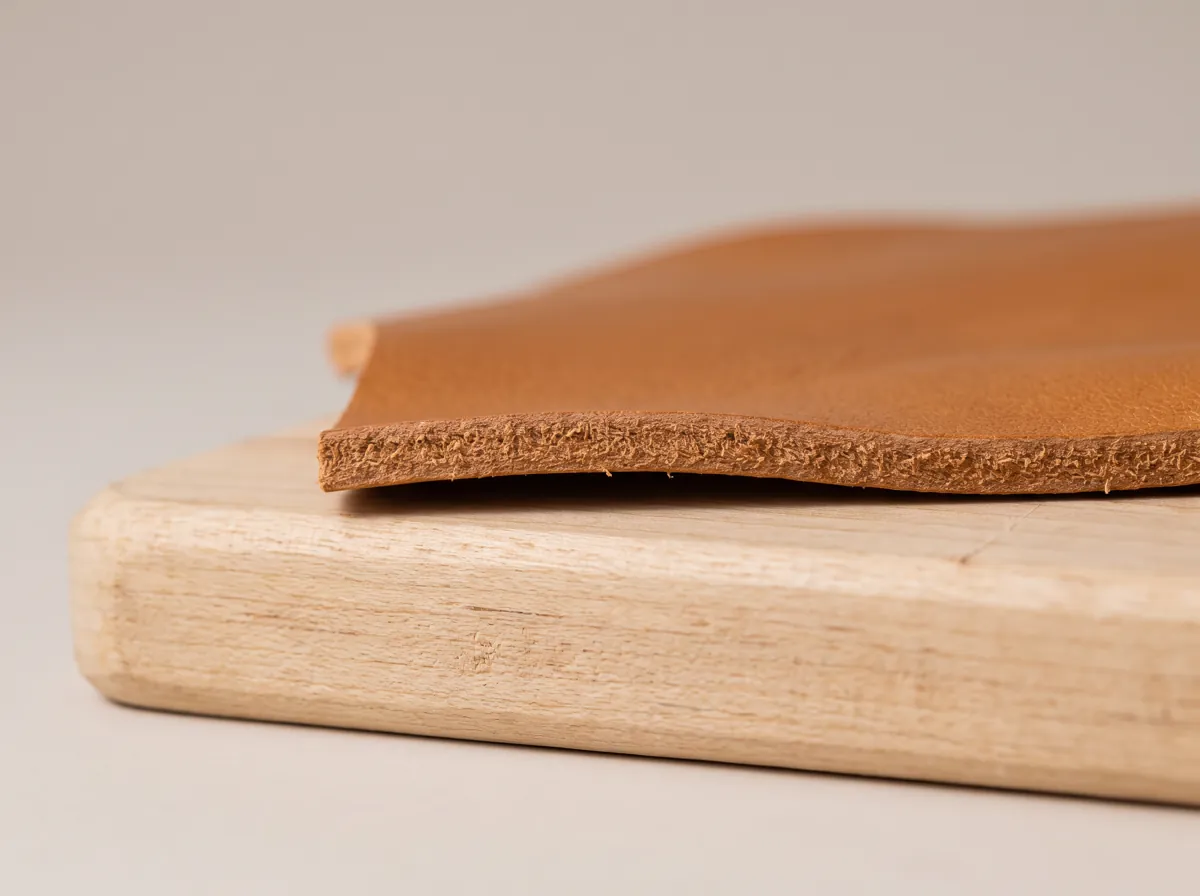
Thick leather can be split into two parts
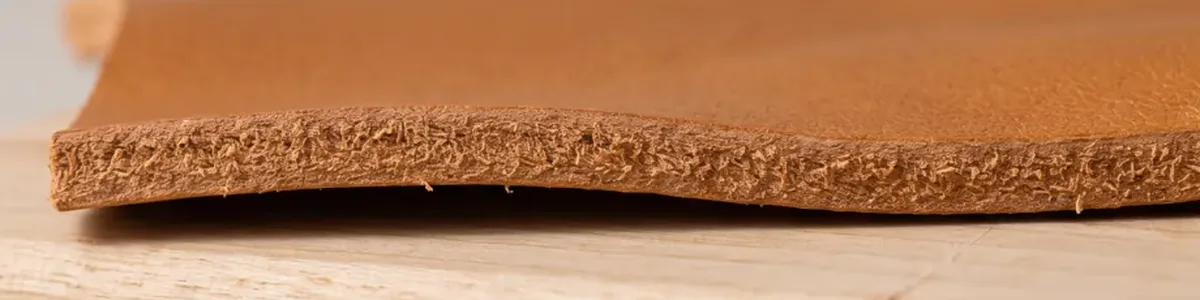
When you cut leather, you see its whole thickness. On top is the grain: the original surface you can see.
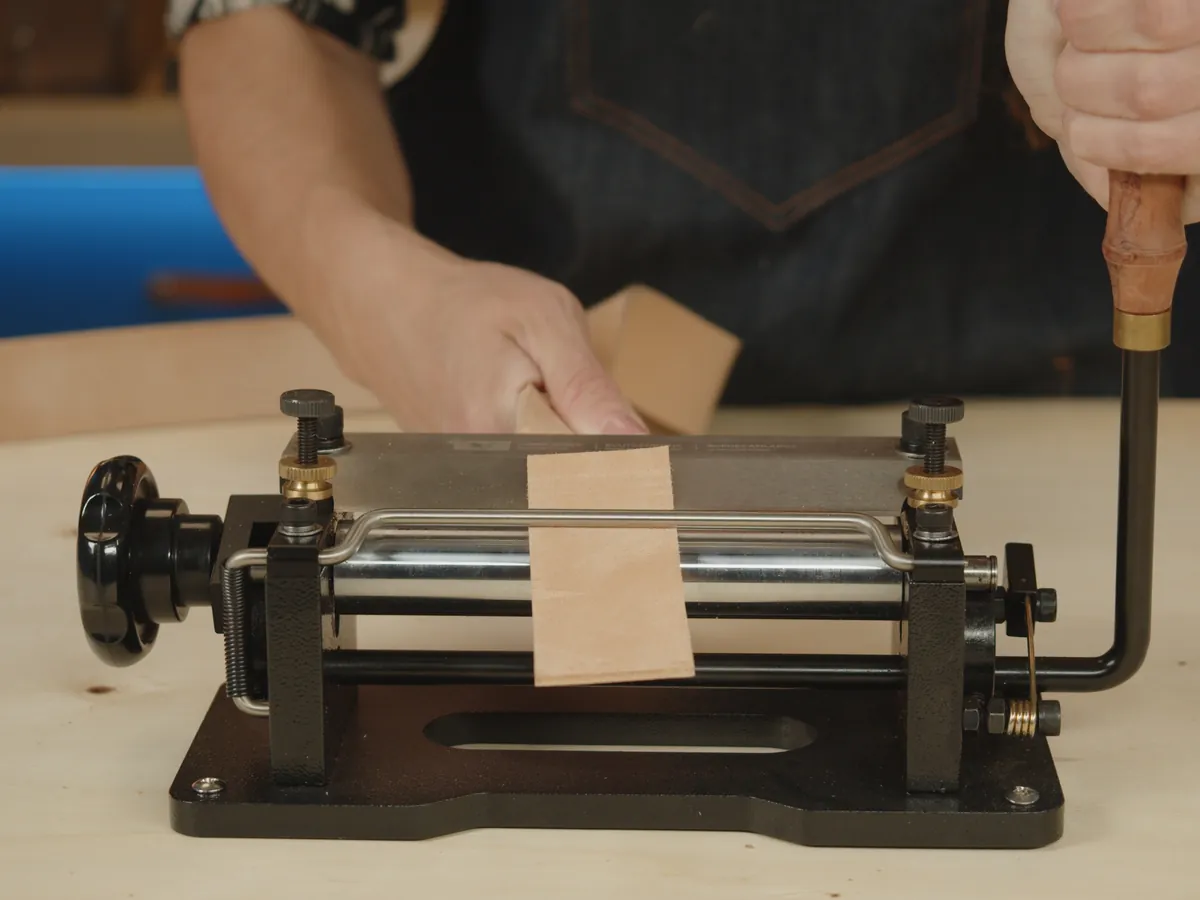
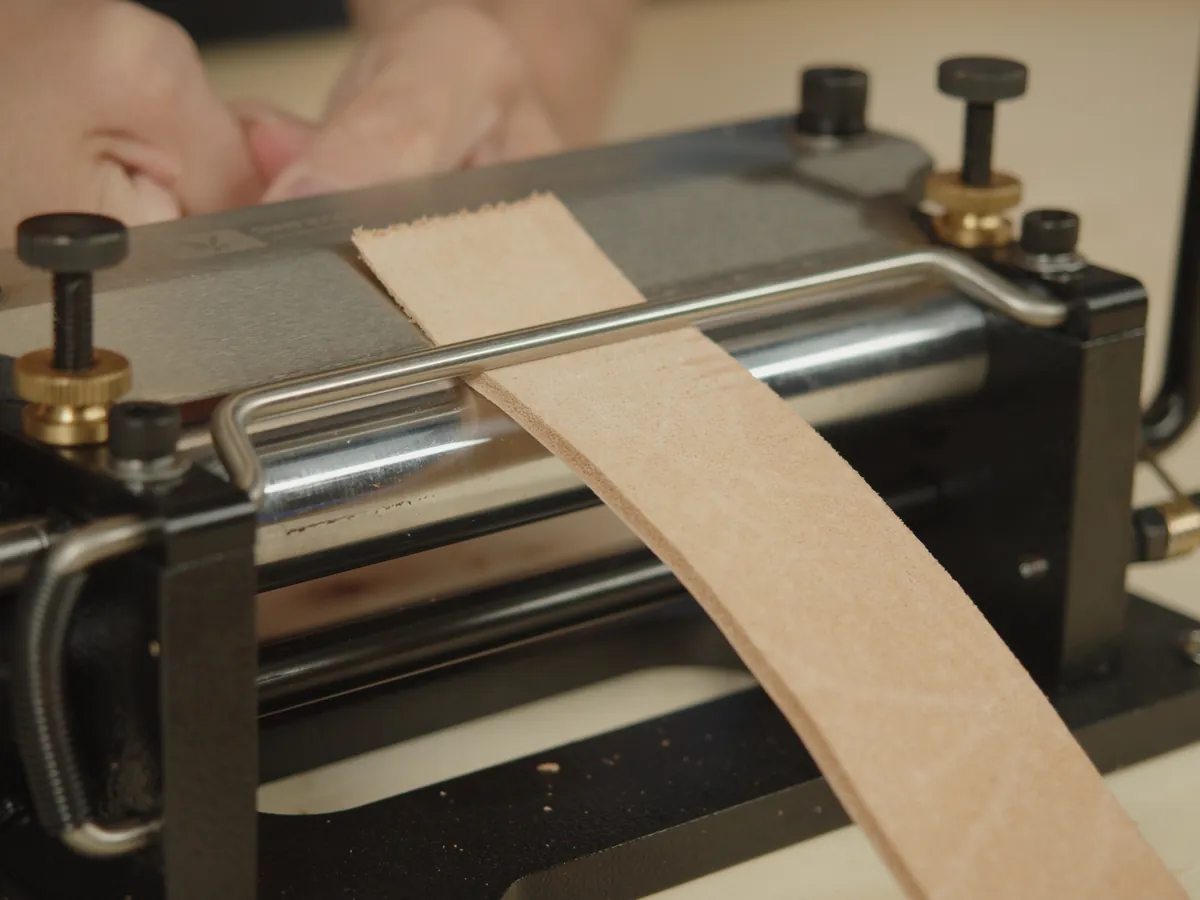
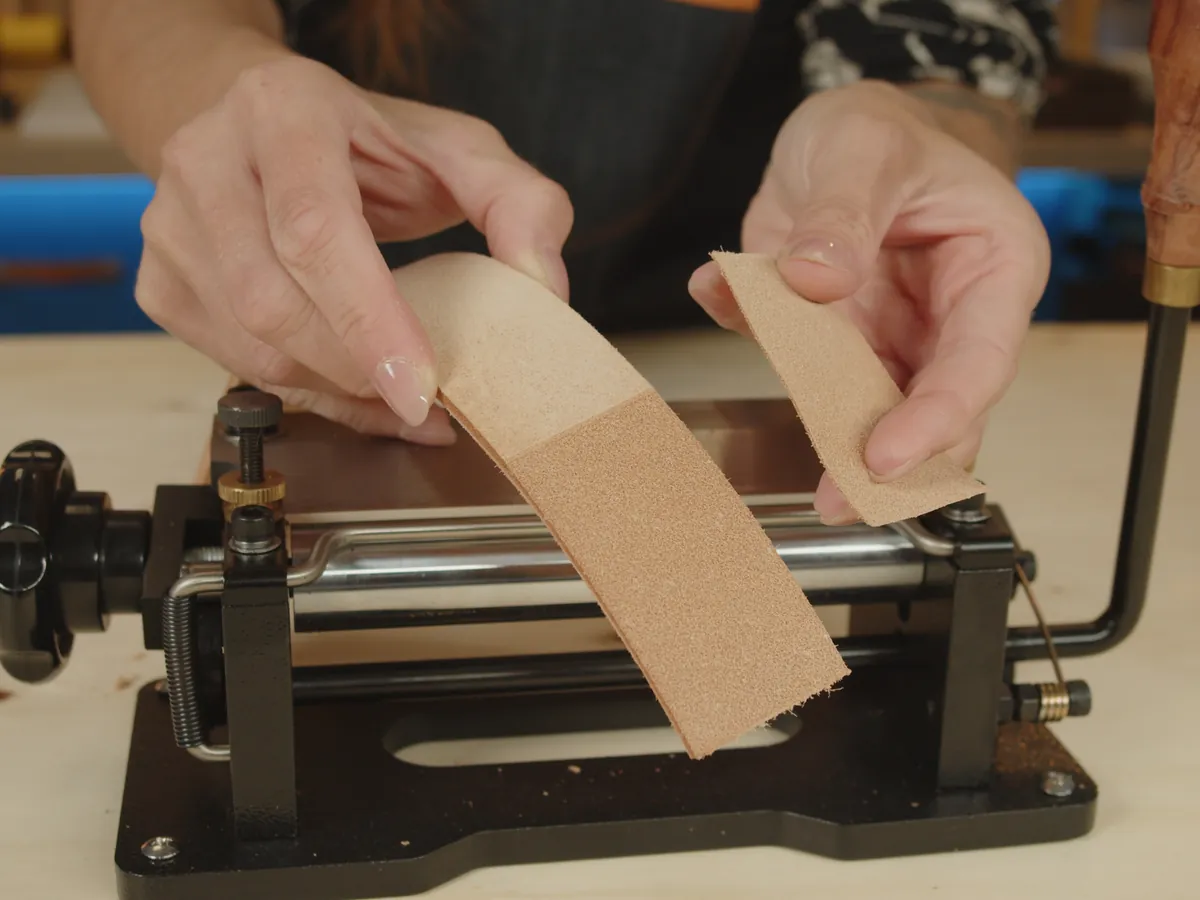
A splitting machine can divide leather through its thickness into two parts.
In a moment you will know which part is which.
Explore
Tap both parts
An example of one split: leather can be split at different thicknesses, so the line shows just one possibility.
Tap the part at the top and the part at the bottom.
Grain leather (top layer)
It keeps the original grain. It is usually stronger and develops a patina over time.
- Full grain: the original grain, nobody has sanded it
- Corrected grain: the grain has been sanded and finished
- Nubuck: the grain is sanded to a short nap
Split
The lower part separated by splitting. It has no original grain. Its surface is usually sanded or covered with colour.
- Split: the English name for split leather
- Suede: sanded split or flesh side, longer nap
Splitting
How splitting works
The photos show the splitting machine we sell.
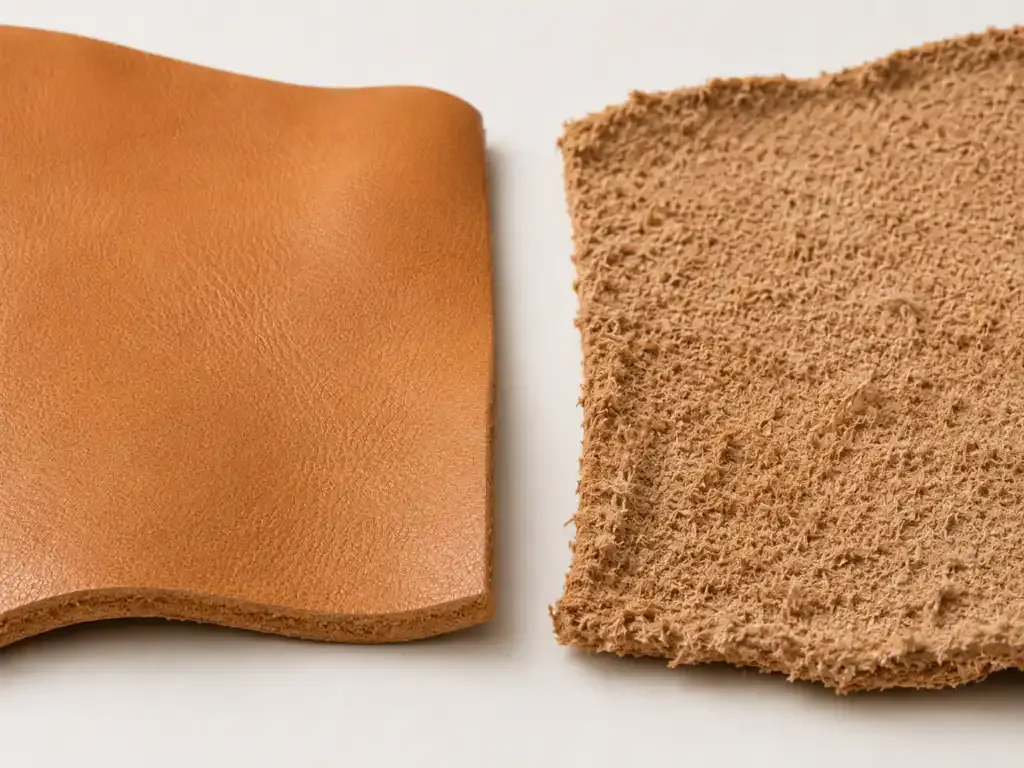
Can you tell the leather?
On the left is grain leather. What is on the right?
Find the mistake
Which word in the name does not fit?
A seller wrote this leather name. One word is wrong.
Fill in the word
What goes in the gap?
The lower part without the original grain is called ______.
Put in order
Put the splitting steps in order
True or myth?
“Embossed split leather is grain leather.”
Done
Remember
Splitting divides leather into two parts. The grain part keeps the original grain. Split leather is the lower part without it.
Lesson 3 · Double butt, double shoulder, bellies
Explore
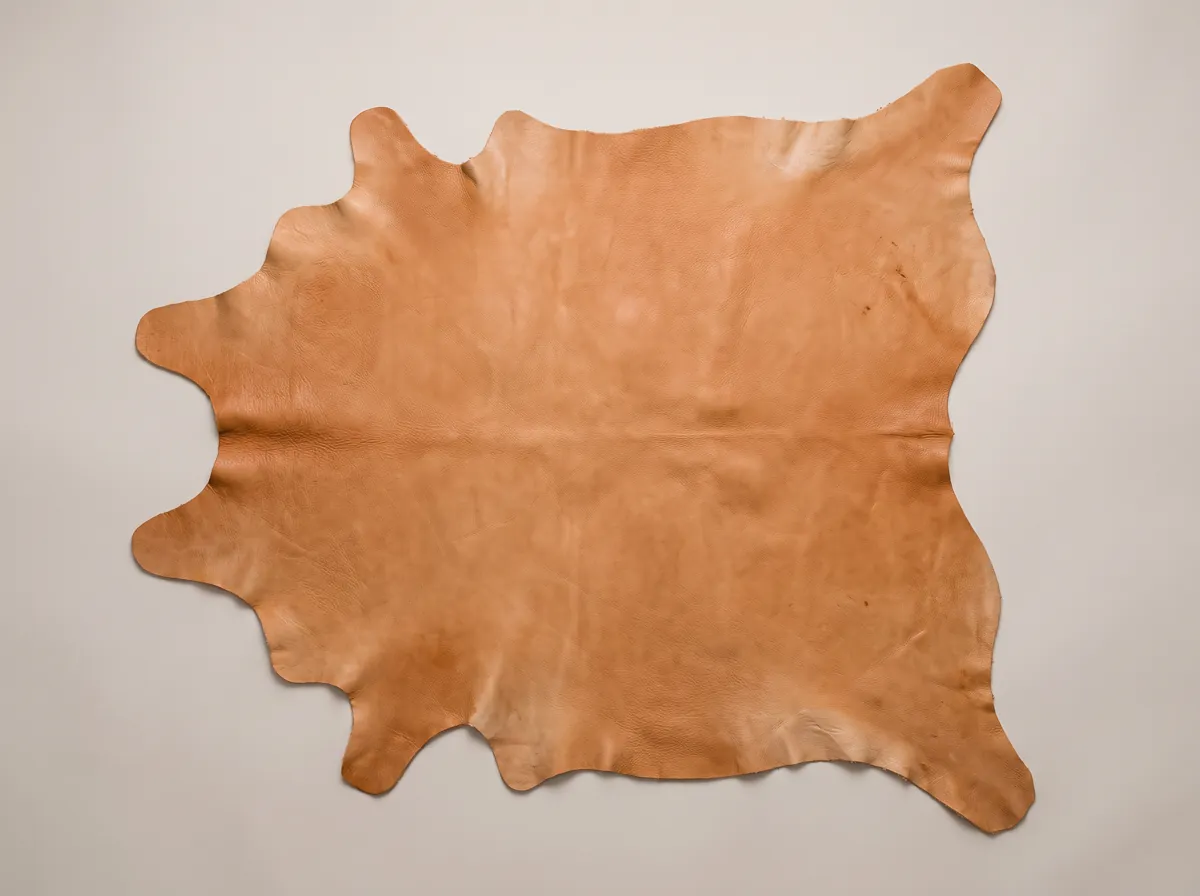
One hide gives different pieces
Tap each piece.
Each piece comes from a different place and behaves differently.
Double butt
A piece from the back and loins. It tends to be firm and almost the same everywhere.
- In stock: grain leather 2.4–5.2 mm, a piece of about 180 dm²
- Also in stock: dyed grain leather 2.8–3.2 mm, dyed split leather 1.2–4 mm
Double shoulder
A piece from the neck and shoulders. It is softer and smaller.
- In stock: grain leather 0.8–2 mm, double shoulder in Premium quality 0.8–4 mm
Bellies (flanks)
Pieces from the sides near the belly. Their fibres are looser, the leather tends to be thinner and stretches more. They suit smaller parts, not straps. We do not sell them separately.
Choose
You want a firm piece that is the same everywhere. Which one is it?
Find the mistake
Which word in the name does not fit?
Match the pairs
What do the English names of the pieces mean?
Show a hint
- double: both halves together, the whole piece
- butt: the back part: back and loins
- shoulder: the part above the front legs
- side: one whole half of the animal, from neck to tail
- belly: the underside of the animal
- bend: a piece cut out of the back part
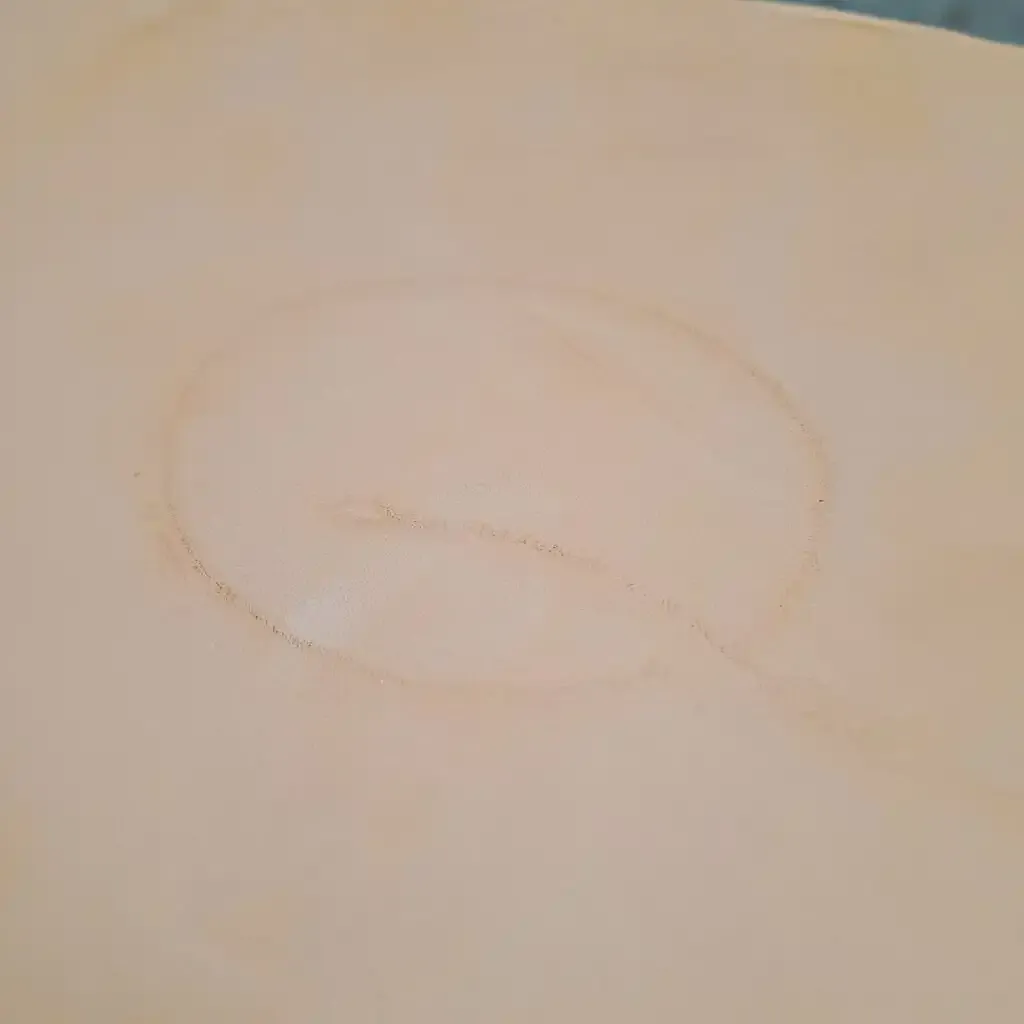
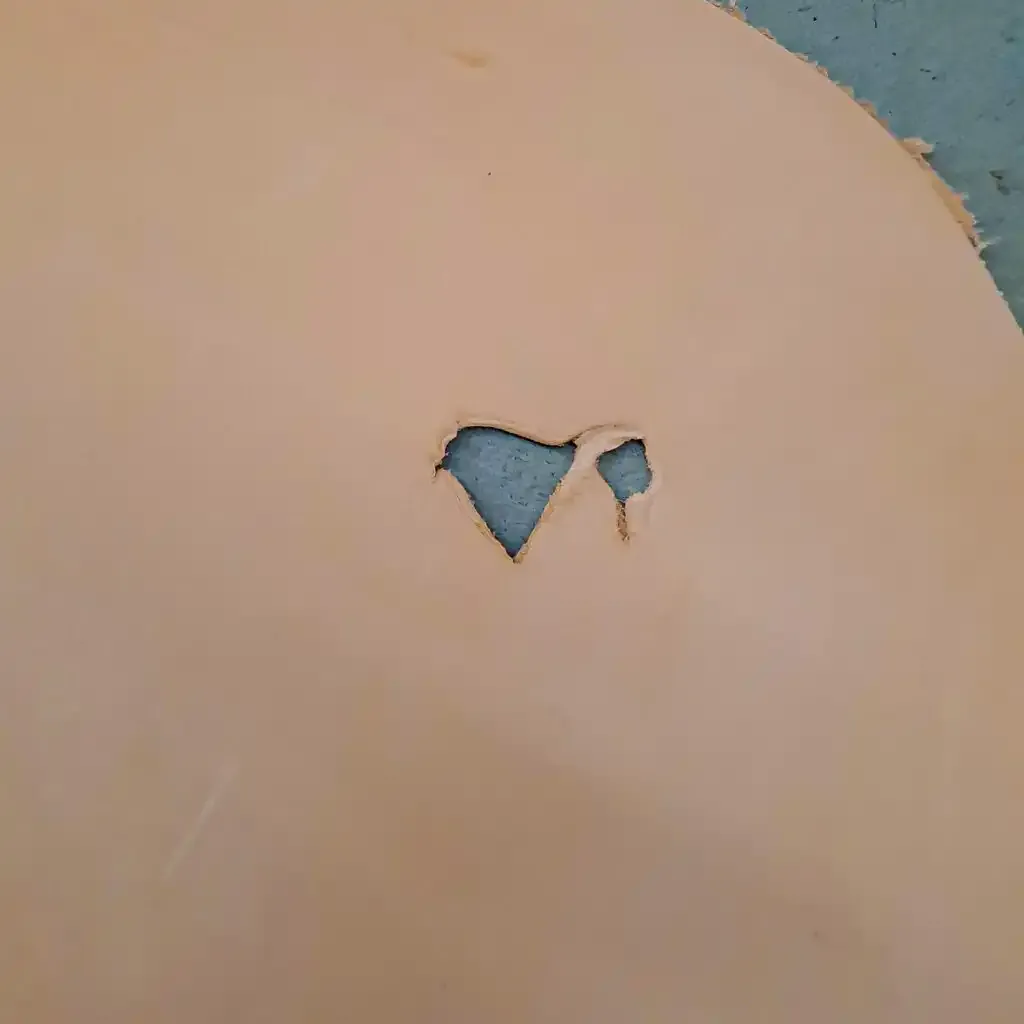
Quality
Leather often has defects
For example a burnt-in brand or damage during processing. Quality tells you how much of the area is free of visible defects.
- Standard: 70–89 % of the area without defects
- Premium: 90–100 % of the area without defects
Try it
The leather has 92 % of its area without visible defects. What quality is it?
Done
Remember
The double butt comes from the back and loins and is the strongest. The double shoulder comes from the neck and shoulders and is softer. In English: double butt and double shoulder.
Lesson 4 · How to read a leather name
Getting started
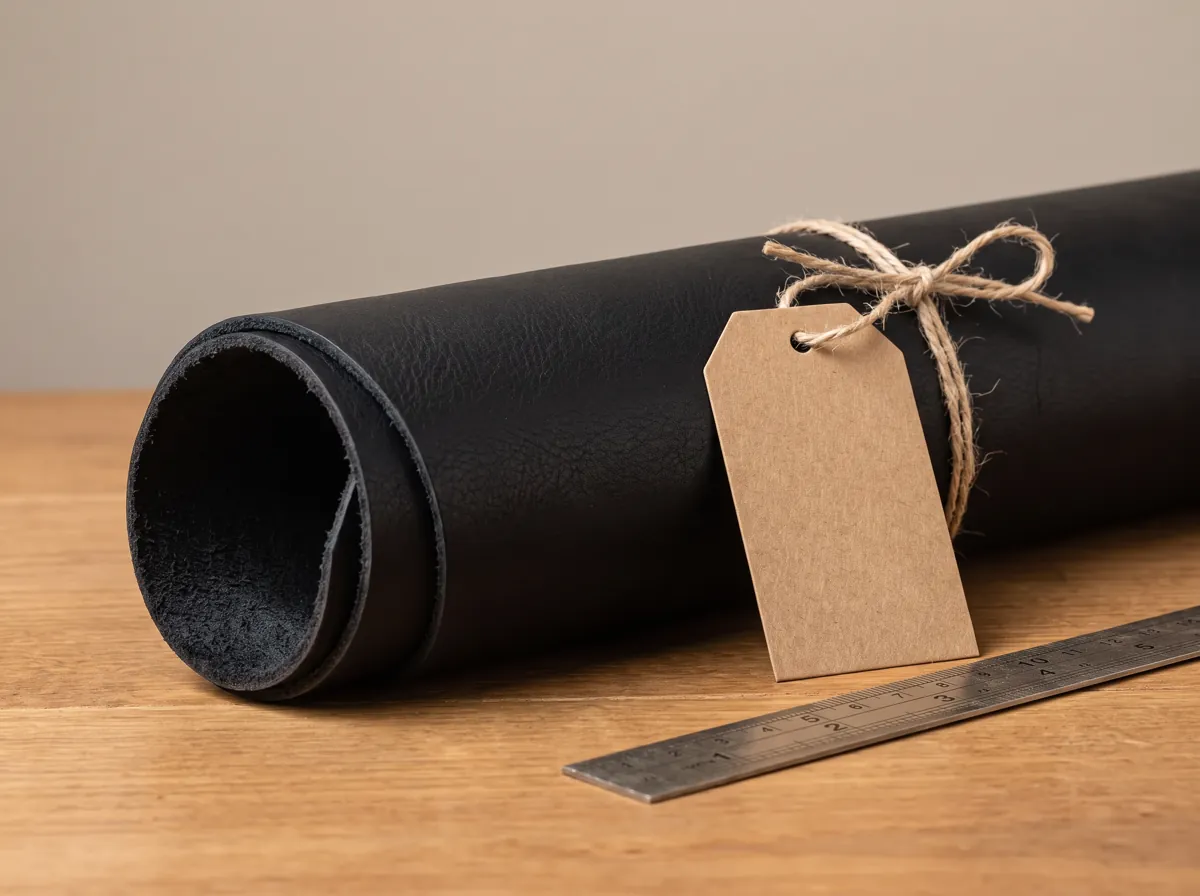
A leather name is like an address
Each word in the name says something different. The words do not rule each other out, they complement each other.
Cowhide leatheranimaldouble buttpart of the hideblackcoloursplitlayer2.8–3.2 mmthickness
Explore
Tap each word
Each word answers one question.
Which animal?
cowhide: From a cow or bull. All the leather we stock is cowhide.
Which part of the hide?
double butt: From the back and loins.
What colour is it?
black: It is dyed black.
Which layer?
split: The lower part without the original grain.
How thick is it?
2.8–3.2 mm: Thickness in millimetres.
Break down the name
Which question does each word answer?
Fill in the word
Fill in which part of the hide the piece comes from
Cowhide leather – ______, black, split
Quiz
What does the word “split” answer?
True or myth?
“Leather is either vegetable-tanned or grain leather. It cannot be both at once.”
Done
Remember
Each word in the name answers a different question: animal, part of the hide, layer, colour, thickness and more.
Lesson 5 · English names
Cheat sheet
Five English names you will meet most often
Full grain can also be dyed, waxed or embossed. It stays full grain as long as nobody has sanded the grain.
Match the pairs
What does the English name mean?
Fill in the word
What goes in the gap?
Full grain = ______ grain
Quiz
Which layer is top grain from?
True or myth?
“Once full grain leather is dyed or waxed, it is no longer full grain.”
Foreign language
On a German shop you see “Vollnarbenleder”. What is it?
True or myth?
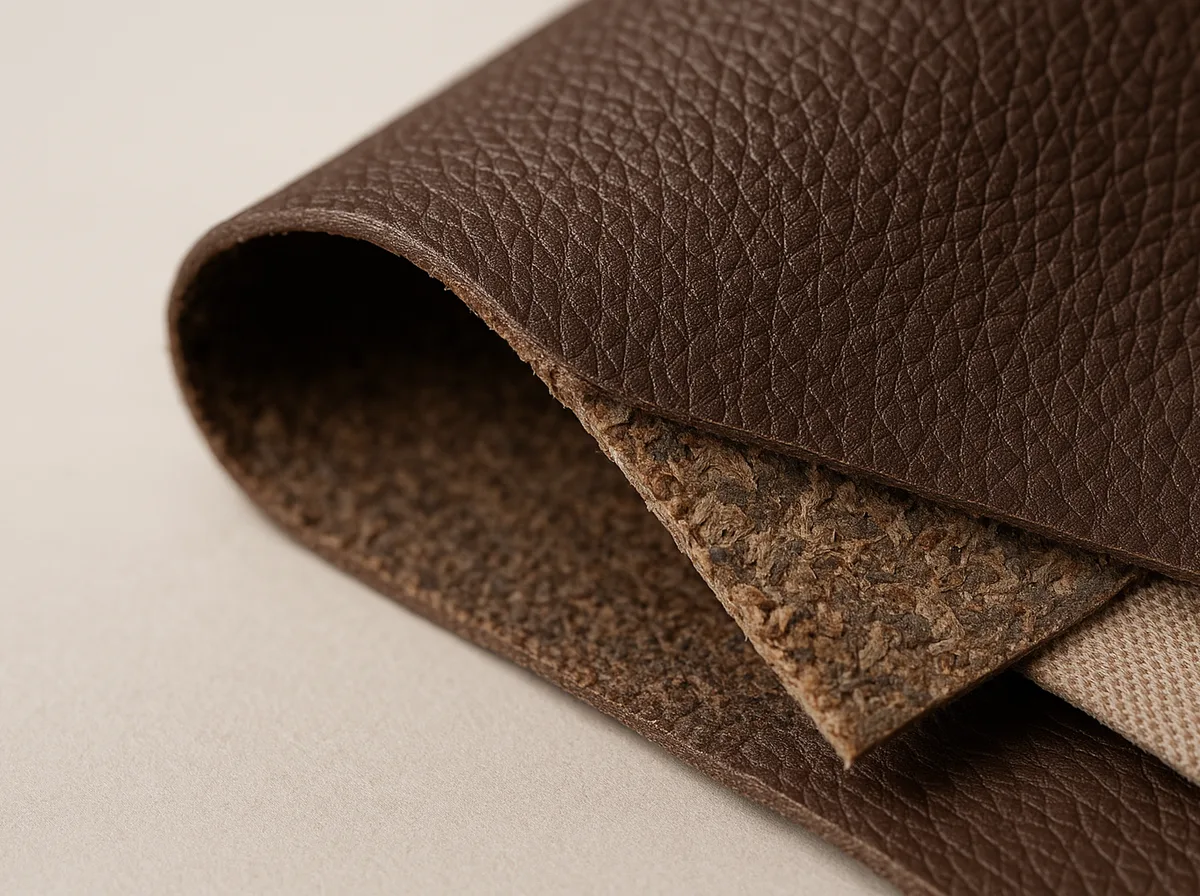
“Bonded leather is a type of leather.”
Done
Remember
Full grain = original grain. Top grain = grain leather, the name is used loosely. Corrected grain = sanded grain. Split = split leather. Bonded = fibres with a binder.
Lesson 6 · Tanning and milling
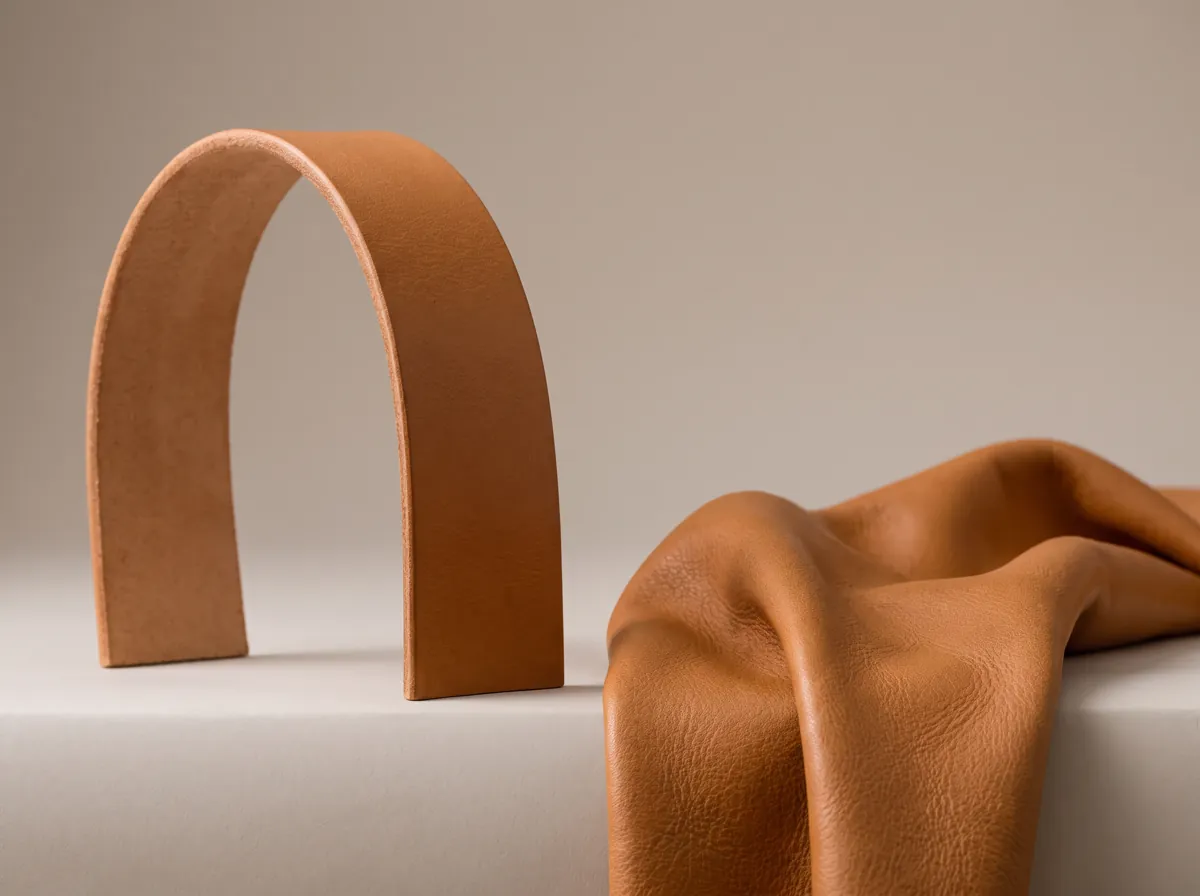
Tanning
What was the leather tanned with?
Tanning affects whether leather tends to be firm or soft. It is not a rule without exceptions: milling, thickness and finishing matter too.
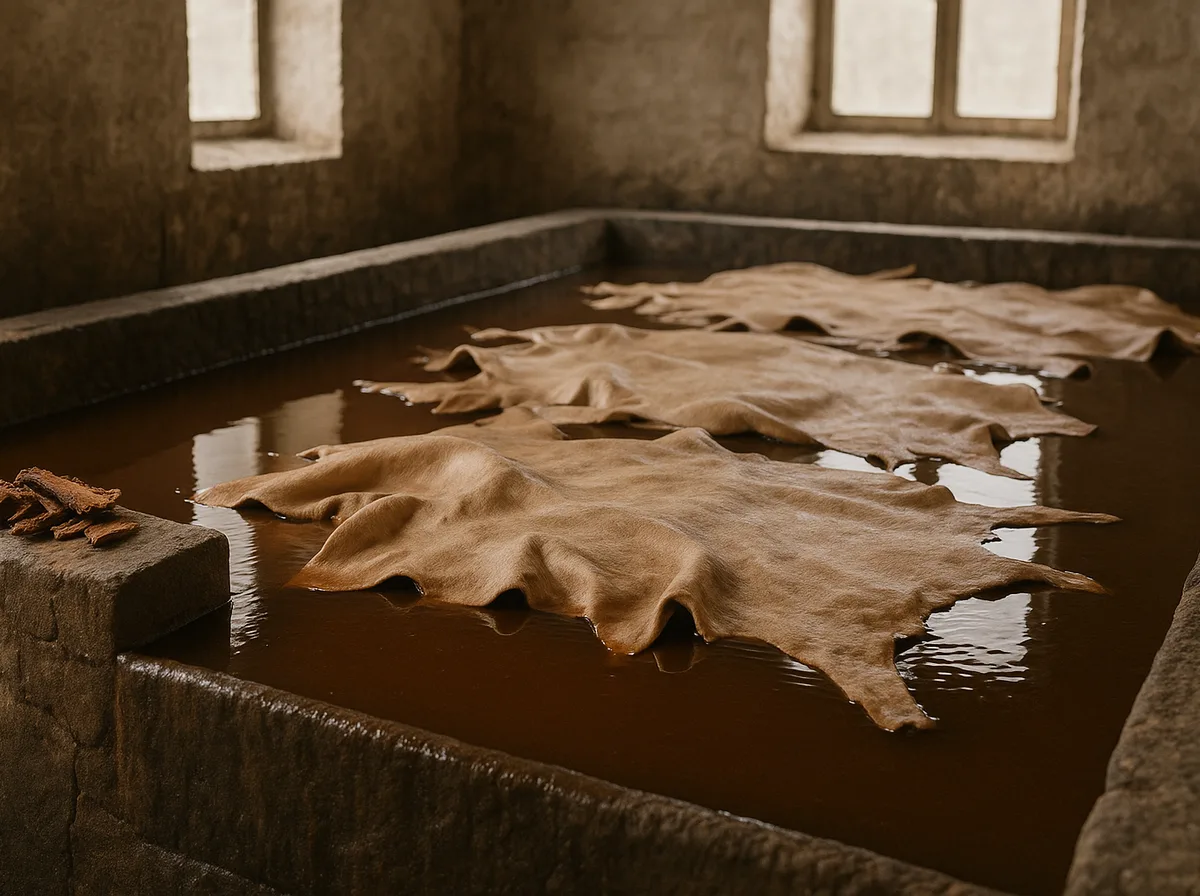
Vegetable-tanned
Tanned with plant substances. It tends to be firmer and holds its shape. It can be stamped with a pattern and dyed.
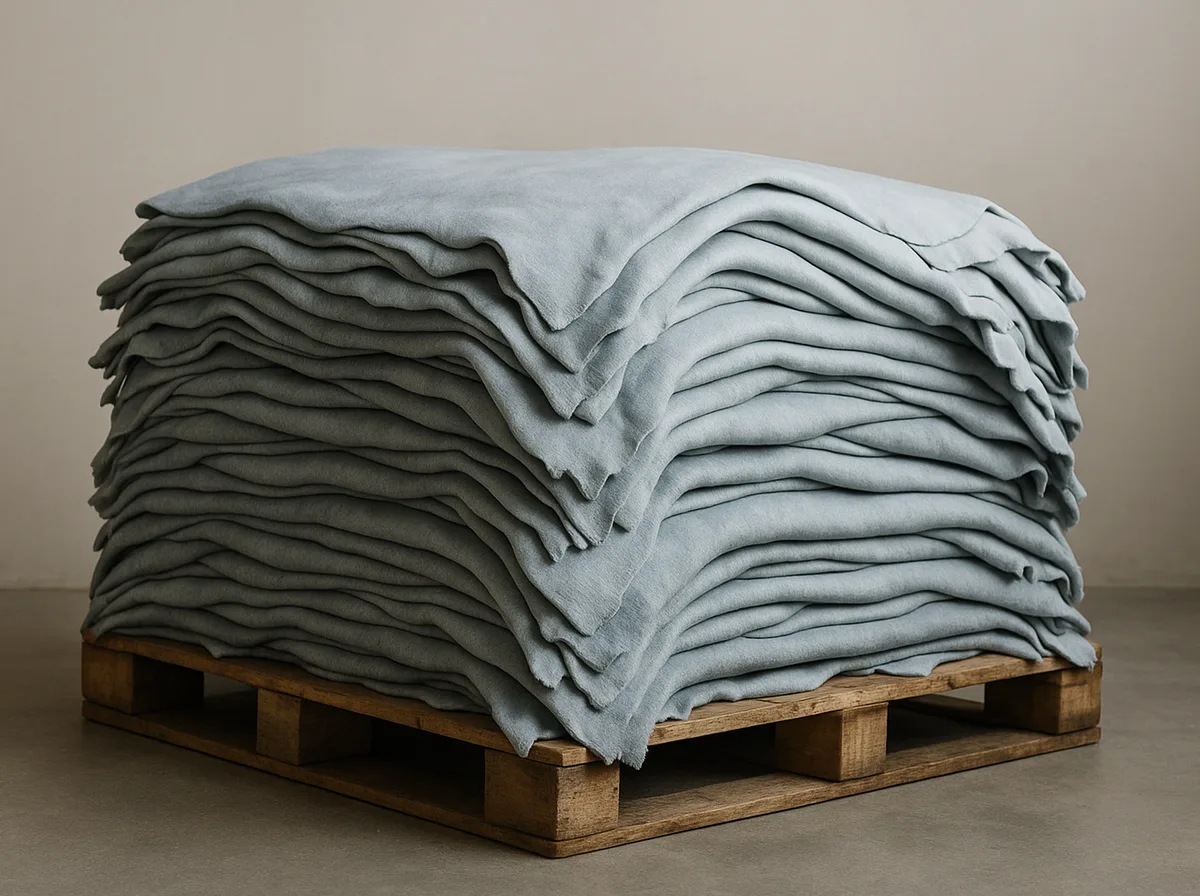
Chrome-tanned
Tanned with chromium salts. It tends to be softer and copes better with damp.
Choose
You want to stamp a pattern into the leather. Which one is suitable?
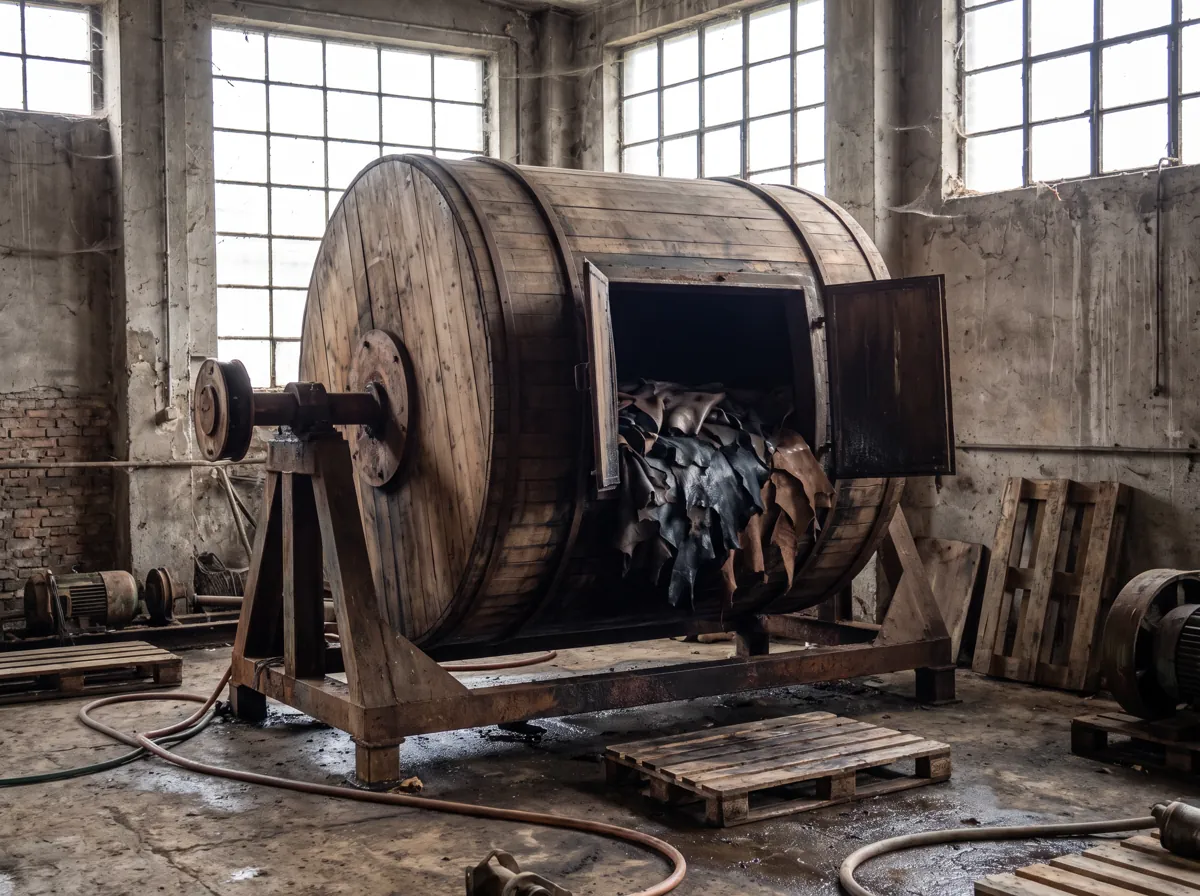
Milling
The leather tumbles in a drum and softens
This is called milling.
- Milled: softer, with a more pronounced grain pattern
- Unmilled: stiffer, smoother, holds its shape
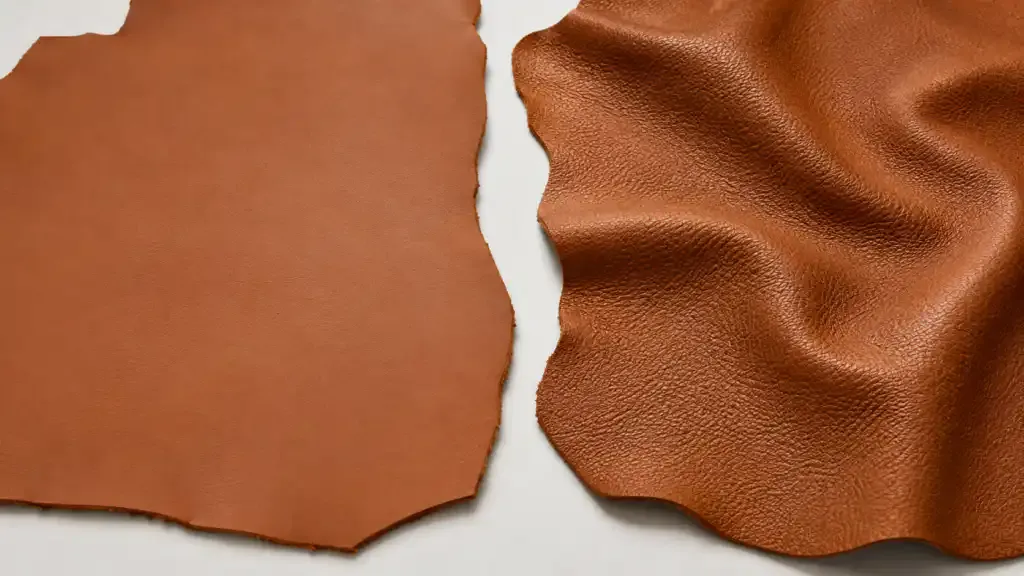
Can you tell the leather?
On the left is unmilled leather. What is on the right?
True or myth?
“Vegetable-tanned leather is always grain leather.”
Quiz
Which of these leathers can you buy from us?
Done
Remember
Vegetable-tanned leather tends to be firmer and can be stamped. Chrome-tanned leather tends to be softer. Milled leather has been softened in a drum.
Lesson 7 · Can you tell leather by eye and touch?
Before you start
Six leathers you can tell by eye and touch
We do not sell nubuck, suede, nappa or pull-up, but you will meet them on finished products.
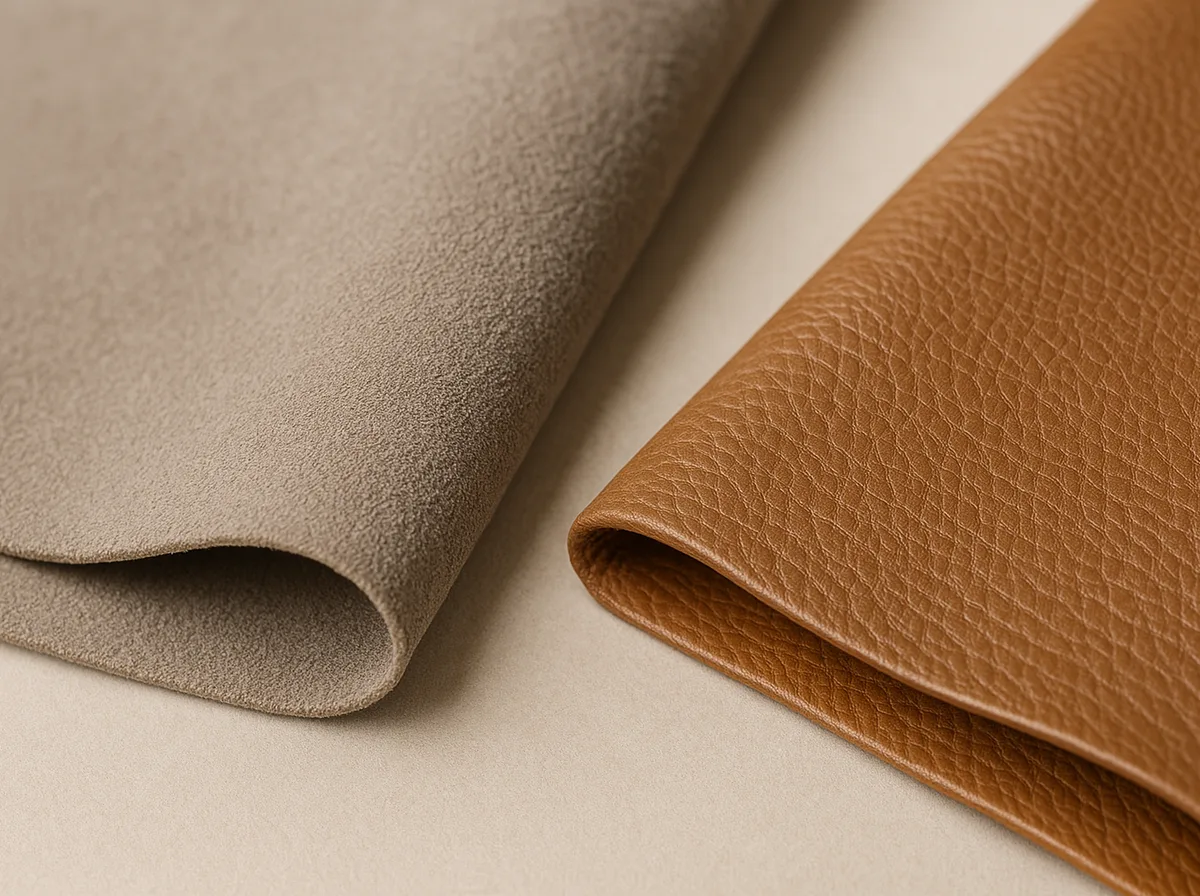
- Nubuck: sanded grain, short nap
- Suede: sanded split or flesh side, longer nap
- Nappa: very soft grain leather
- Pull-up: oil and wax, lightens when bent
- Aniline: transparent dye, pores are visible
- Pigmented: covering colour, the shade is the same everywhere
Pick the photo
Which photo shows nubuck?
Hint: it has a short nap.
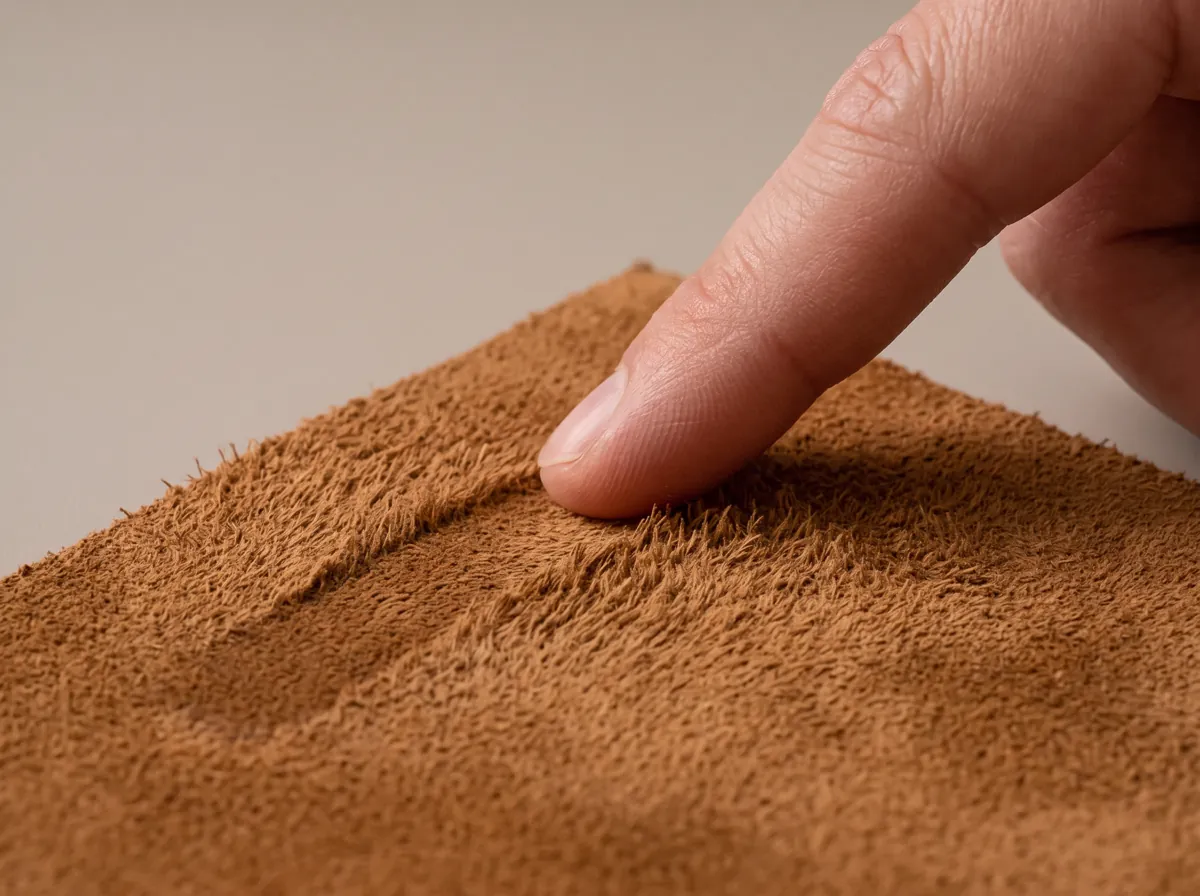
Finger test
You run a finger against the nap and feel a longer nap. What is it?
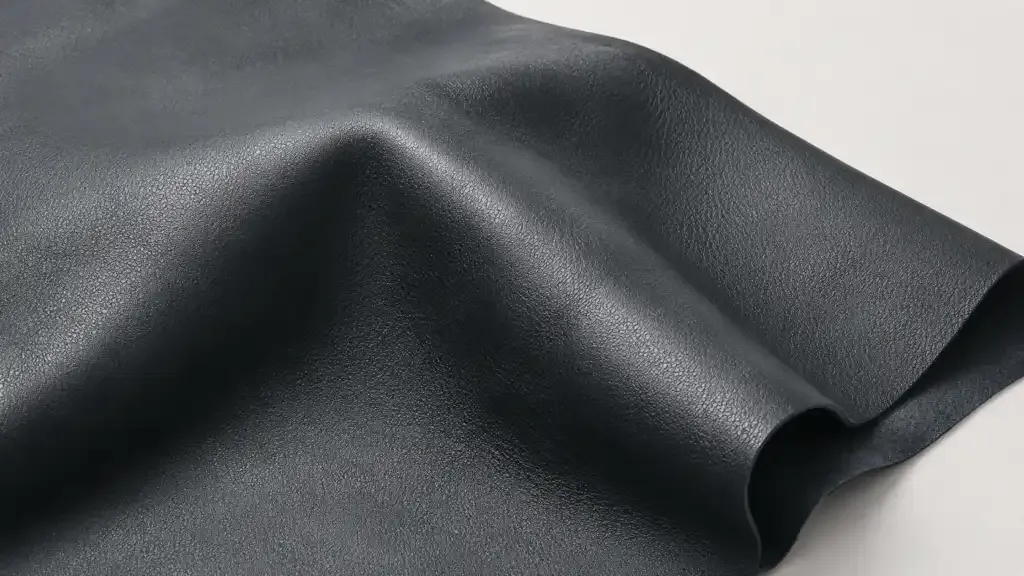
Can you tell the leather?
What is in the photo?
Pick the photo
Which photo shows aniline leather?
Hint: the pores are visible.
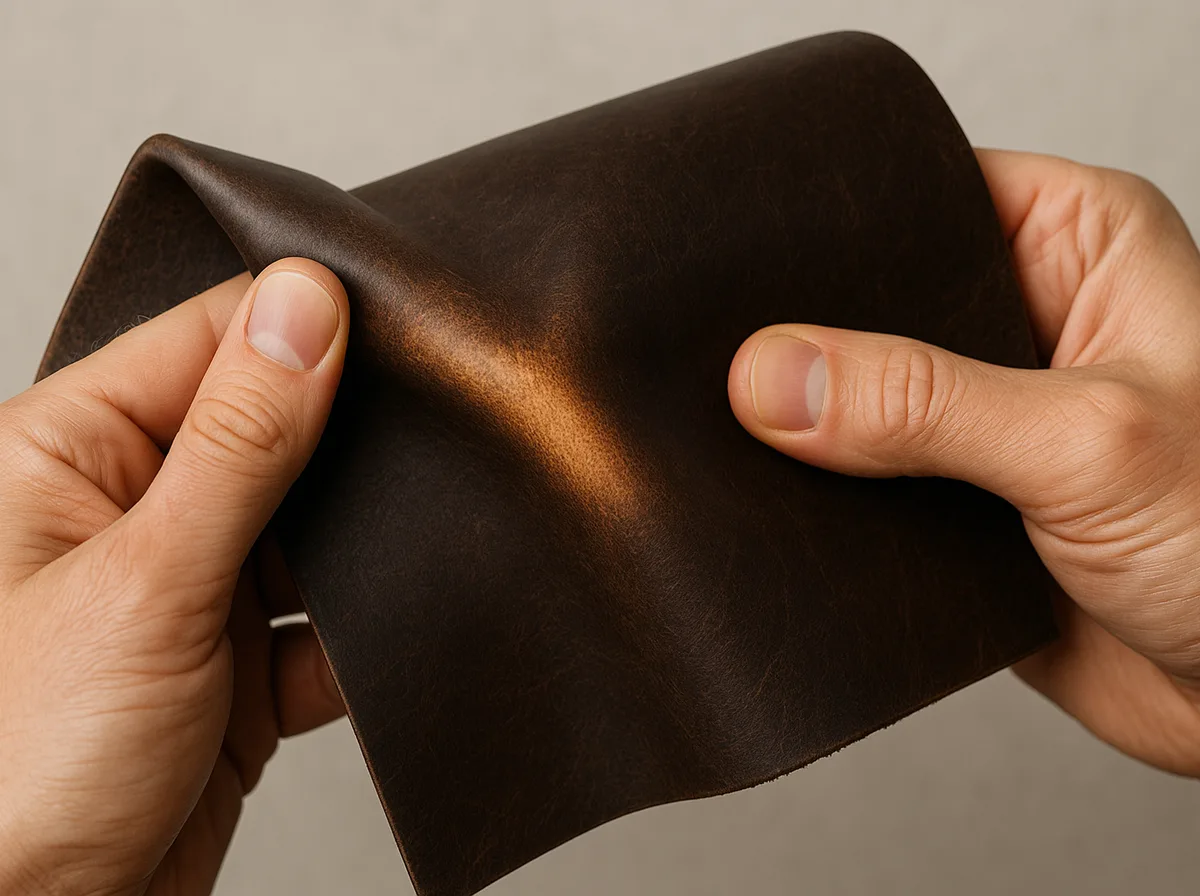
Can you tell the leather?
You bend the leather and it lightens in the bend. What is it?
True or myth?
“Alcantara is leather.”
Done
Remember
You can tell the nap with your finger. You can tell pull-up by bending it. You can tell aniline leather by its pores.
Lesson 8 · For real: your leather
Find the mistake
The seller says it is split leather. Which word does not fit?
Fill in
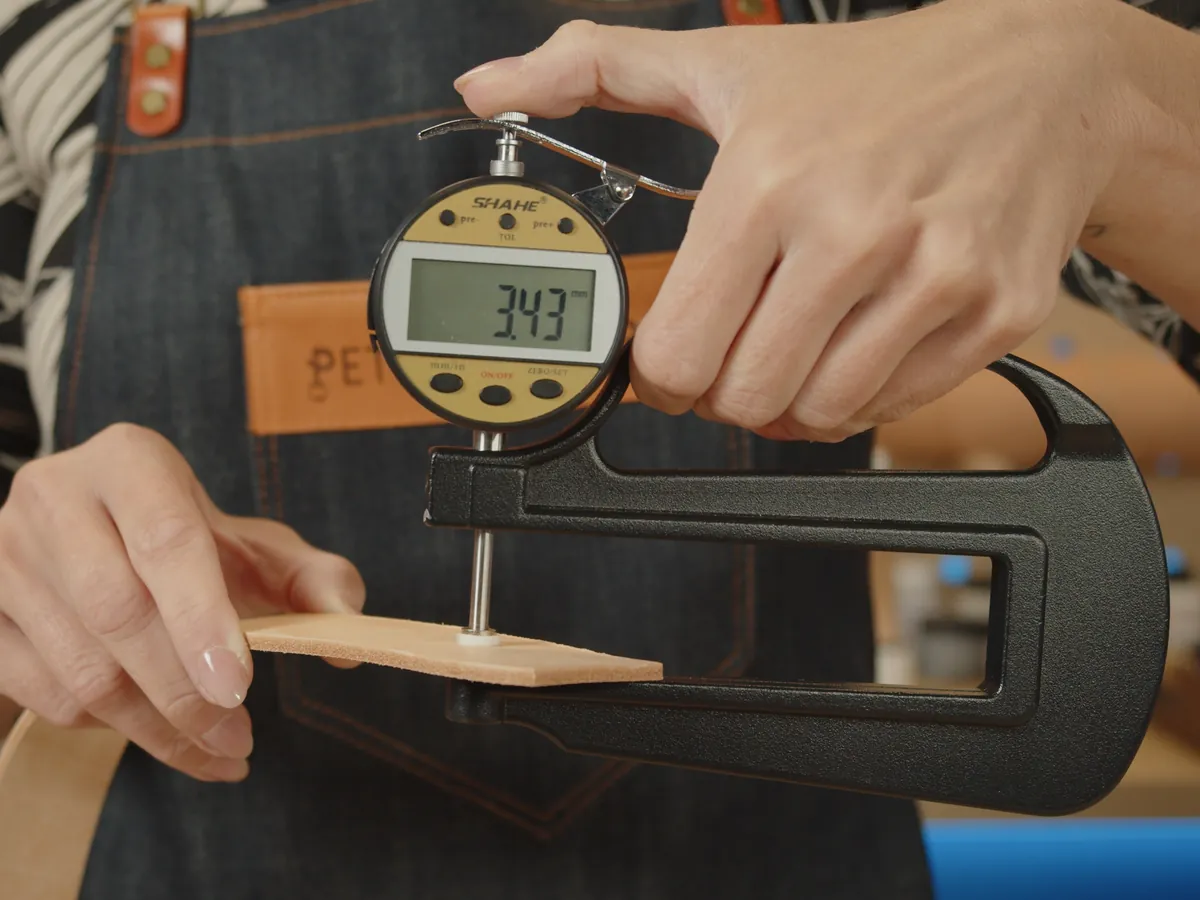
How thick does leather for a small dog collar need to be?
For a small collar I need leather ______ thick.
Foreign language
On a foreign shop you see “double shoulder, veg-tan”. What is it?
What does a leather name mean?
Now try it on a real name
Type or pick a leather name. The tool splits it into words and explains each one.
What are you making?
Pick a product and get a recommendation
You will see the thickness and the leather we have in stock.
Recommended use: Belts, collars, leashes, sturdy bags, holsters
Recommended use: Saddles, straps, sturdy bags, holsters
Recommended use: Handbags, wallets, soft bags
Recommended use: Wallets, covers
- Animal cowhide
- Tanning vegetable-tanned
- Softening in a drum unmilled
- Thickness Medium (1.6–2.5 mm)
Leather is a natural material, so allow for a ±0.2 mm tolerance within a single hide.
Done
Remember
You have finished the course. You will also find the explanation of leather names below the course whenever you need it.
Got a leather name in front of you? We will explain it right away.
Leather guide – production, types and uses
Want to go deeper? A detailed article is on the blog.
Related tools
- Leather colour chart Real leather sample discs for every dye, antique finish and Angelus paint we stock.
- Leather thickness converter Convert leather thickness oz to mm, with product recommendations and links to matching leather in stock.
- Which glue for which material Pick two materials and see which of our glues bonds them, how to glue and what to watch out for.
- Materials Properties of every material side by side: strength, weight, corrosion resistance and water.
- Surface finishes Surface finishes side by side: look, abrasion resistance, nickel content and damp conditions.