Steel offers high strength at a low price, so we make rings, buckles, snap hooks and tools from it. You choose the look and durability with the finish.
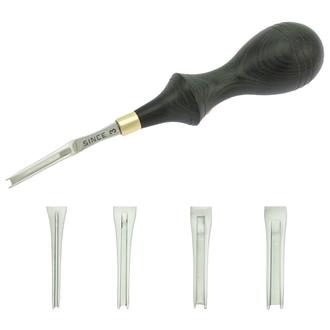
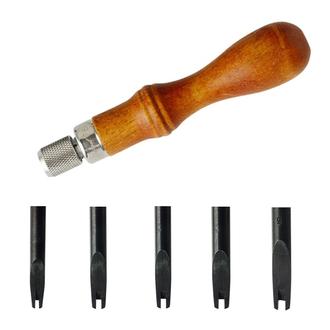
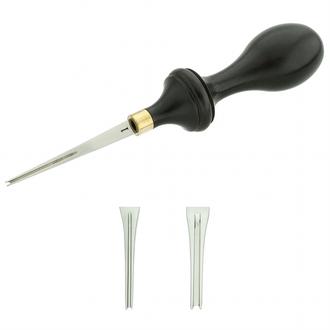
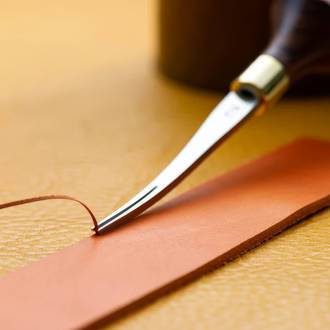
Blade width: 0.8, 1 mm If you regularly bevel edges on belts, sheaths or leashes, with the Kemovan edge beveler you sharpen less often than with a tool made of softer steel: its cutting head is D2 steel and its handle is ebony.
An alloy of iron with a small amount of carbon and the most important structural material in the world. Bare steel rusts in damp conditions, which is why most of our steel hardware has a finish: nickel, chrome, zinc or matte black. How the finished piece handles rain, sweat and skin depends on the finish.
Why we use it for hardware
Steel offers high strength at a low price and can be bent from wire, stamped from sheet and welded. That is why we have rings, D-rings, buckles, rivets, snap hooks, chain collars and leatherworking tools made from it.
When to choose it and when to look elsewhere
Everyday products at a good price: choose the finish according to how the product will be used.
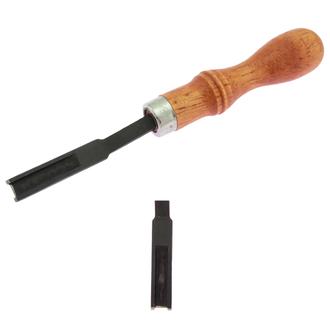
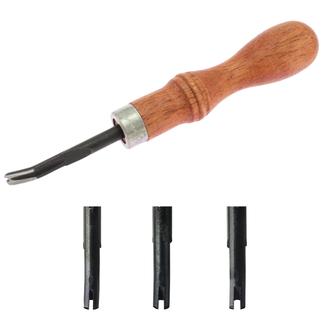
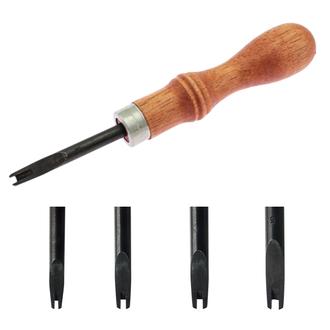
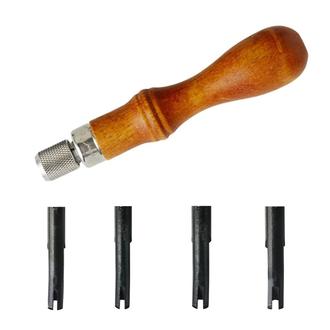
Tools: hardened steel holds an edge and withstands repeated mallet blows.
In wet conditions, the finish decides: zinc protects even small scratches by corroding first, while nickel and chrome protect only as long as the layer is intact. For frequent contact with water or sweat, choose stainless steel; for the sea, 316 stainless steel. For sensitive skin, check the finish; several of our finishes contain nickel.
How it ages and how to care for it
Where webbing, a ring or a buckle prong rubs against the finish, it can wear through over time and the steel starts to rust there. Wipe wet hardware dry and check worn spots on heavily used items. Store unfinished tools in a dry place and occasionally wipe them with a thin layer of oil.
Good to know
Rust is not just a cosmetic flaw: it can spread from a damaged spot under the coating and lift the surrounding finish. Small scuffs on frequently wet hardware are therefore worth watching.
Values describe the bare material without a surface finish; the finish page says what changes.
Price
Lowest
The lowest price class in this comparison. Suited to larger production runs and projects where unit cost is a priority.
Strength
High
Suitable for strong, repeated pulling. Holds its shape under sustained loads better than materials in the lower strength classes.
Corrosion resistance
None
The bare material has no useful corrosion resistance. Choose a protective finish when the product may come into contact with moisture or sweat.
Water
Dry conditions only
Contact with water can cause corrosion, swelling, mould or other damage. Keep the material dry and dry it promptly if it becomes wet.
Weight
Medium
A mid-weight option. For small collars, accessories and products worn for long periods, compare the weight of the complete product with a lighter material.
Allergy risk
Depends on finish
The allergy risk depends mainly on the selected surface finish, which may contain nickel or another contact allergen. Check the finish rather than relying on the base material alone.
Aging
Degrades
Without protection, both function and appearance deteriorate over time. Typical signs include colour loss, embrittlement or cracking, a rougher surface, rust or white corrosion products.
Maintenance
Regular care
Regular treatment, oiling or impregnation helps preserve the material. Follow the care instructions for the complete product, because the required method and interval can vary.
Chemical composition
Grade
Q195
Data source
Material supplier specification
Composition of the base alloy according to the supplier's specification (nominal ranges in percent by mass). This is neither an analysis of the delivered batch nor a declaration of regulatory compliance. Does not cover the surface finish.