Eye width: 11–20 mm, Number of sizes: 3, Material: malleable iron, Breaking load: up to 120 kg, 10 pcs/pack, Price per pc
● In stock
from 1,69 € / pc
Material
Malleable iron is annealed cast iron, strong and tough, used for snap hooks with complex shapes. Bare, it rusts, so ours are nickel plated. See the snap hooks.
Prices include 21% VAT. More about VAT and customs fees.
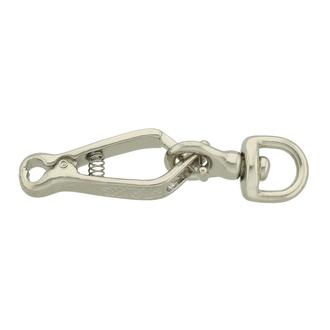
Eye width: 11–20 mm, Number of sizes: 3, Material: malleable iron, Breaking load: up to 120 kg, 10 pcs/pack, Price per pc
● In stock
from 1,69 € / pc
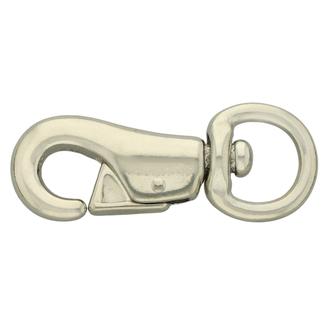
Eye width: 25 mm, Material: malleable iron, Breaking load: up to 500 kg, 10 pcs/pack, Price per pc
● In stock
2,56 € / pc
Cast iron that the foundry anneals for many hours after casting. Annealing turns hard, brittle white iron into a tough material that withstands pulling and shocks. Bare malleable iron rusts in damp conditions much like steel, which is why our snap hooks made from it have a nickel finish.
Casting produces a snap hook body with a complex shape in a single piece. We have malleable iron bull snaps for working with horses and cattle, and scissor snaps for hunting and sports leashes.
For frequent contact with water, sweat or the sea, choose a snap hook made from cast stainless steel. For lighter loads, zinc die casting is enough. For sensitive skin, keep in mind that the surface is nickel.
Where rope, webbing or chain rubs against the nickel layer, it can wear through over time and the iron starts to rust there. Wipe a wet snap hook dry, rinse mud and sand out of the jaws and away from the spring, and now and then put a drop of oil on the moving parts.
Malleable iron is also the traditional material for threaded pipe fittings in water and gas lines: elbows and tees that must not crack when a plumber tightens them with a wrench. Do not confuse it with ductile iron. That is a different material, cast iron with spheroidal graphite, which gets its properties during casting itself.
Values describe the bare material without a surface finish; the finish page says what changes.
Price
Lowest
The lowest price class in this comparison. Suited to larger production runs and projects where unit cost is a priority.
Strength
High
Suitable for strong, repeated pulling. Holds its shape under sustained loads better than materials in the lower strength classes.
Corrosion resistance
None
The bare material has no useful corrosion resistance. Choose a protective finish when the product may come into contact with moisture or sweat.
Water
Keep dry
Contact with water can cause corrosion, swelling, mould or other damage. Keep the material dry and dry it promptly if it becomes wet.
| Weight | Medium | A mid-weight option. For small collars, accessories and products worn for long periods, compare the weight of the complete product with a lighter material. |
|---|---|---|
| Allergy risk | Depends on finish | The allergy risk depends mainly on the selected surface finish, which may contain nickel or another contact allergen. Check the finish rather than relying on the base material alone. |
| Aging | Degrades | Without protection, both function and appearance deteriorate over time. Typical signs include colour loss, embrittlement or cracking, a rougher surface, rust or white corrosion products. |
| Maintenance | Regular care | Regular treatment, oiling or impregnation helps preserve the material. Follow the care instructions for the complete product, because the required method and interval can vary. |