Length: 14–26 mm, Number of sizes: 6, Material: copper, 100 pcs/pack, Price per pack
● In stock
from 19,66 € / pack
Material
Copper is soft, heavy and darkens to a brown patina. It suits hand-riveted joints and handles rain and fresh water, but not sea water or load-bearing parts.
Prices include 21% VAT. More about VAT and customs fees.
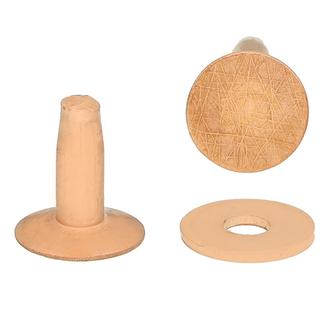
Length: 14–26 mm, Number of sizes: 6, Material: copper, 100 pcs/pack, Price per pack
● In stock
from 19,66 € / pack
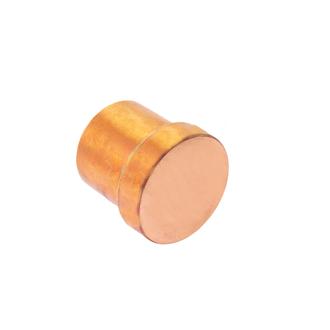
A 19 mm copper anvil serves as the lower support pad for the #3990-00 hand press.
● In stock
32,95 € / pc
A metal with a warm reddish tone; unlike brass and bronze, it is not an alloy. It is softer than brass and heavier than steel, and in hardware it has its place where easy forming and appearance matter.
For saddlery rivets with burrs: soft copper spreads easily under the rivet setter, so you can close the rivet by hand. The same softness makes copper a good anvil under a punch in a press, because it gives way before the cutting edge of the punch does.
For parts that carry the pull directly, such as snap hooks, buckles and rings, choose brass or stainless steel. Copper does not withstand sea water; for regular use by the sea, take 316 stainless steel.
Shiny copper gradually darkens to brown, and where sweat or salt stays on it, green deposits can appear later. This layer does not weaken the metal. Polishing restores the original tone; wax or clear lacquer slows the change. Do not use cleaners containing ammonia.
Green marks on skin are copper salts from the reaction with sweat. They wash off with soap and water and are not in themselves a sign of allergy.
Values describe the bare material without a surface finish; the finish page says what changes.
Price
Higher
A higher price class, typically associated with a particular material property, manufacturing method or finish. Check the other specifications to see what accounts for the difference.
Strength
Medium
Suitable for everyday products exposed to moderate loads. Repeated strong pulling may deform the material, so check the strength of the complete product for demanding uses.
Corrosion resistance
Outdoor exposure
Suitable for typical outdoor contact with rain and dew without a protective coating. More demanding environments, such as salt water or chemicals, require a different rating.
Water
Fresh-water immersion
Suitable for repeated wetting and immersion in fresh water. Any care requirements for the complete product still depend on its other materials and components.
| Weight | Heavy | The highest weight class in this comparison. Better suited to larger products and applications where low weight is not a priority. |
|---|---|---|
| Allergy risk | Low contact-reaction risk | The material has a low risk of causing a contact reaction in normal use. Individual sensitivity varies, and the selected surface finish and other components also matter. |
| Aging | Develops patina | Naturally changes colour tone and surface texture. This is not a defect; it is a property of the material. The patina develops gradually and may differ from one piece to another. |
| Maintenance | Occasional cleaning | Wipe occasionally with a dry or slightly damp cloth. No specialist products or fixed care schedule are required. |