Width: 20–50 mm, Number of sizes: 5, Material: anti-freeze acetal, Breaking load: up to 100 kg, 50 pcs/pack, Price per pc
● In stock
from 0,288 € / pc
Material
Anti-freeze acetal for side release buckles, rated by the supplier to −20 °C. Light, barely absorbs water, easy to care for. For winter collars and harnesses.
Prices include 21% VAT. More about VAT and customs fees.
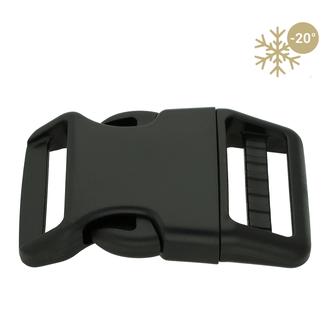
Width: 20–50 mm, Number of sizes: 5, Material: anti-freeze acetal, Breaking load: up to 100 kg, 50 pcs/pack, Price per pc
● In stock
from 0,288 € / pc
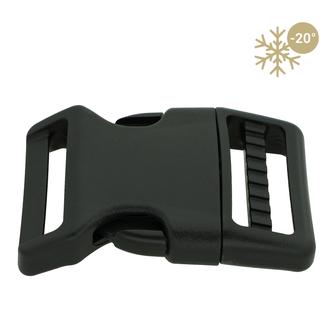
Width: 38–50 mm, Number of sizes: 2, Material: anti-freeze acetal, Breaking load: up to 110 kg, 10–25 pcs/pack, Price per pc
● In stock
from 0,738 € / pc
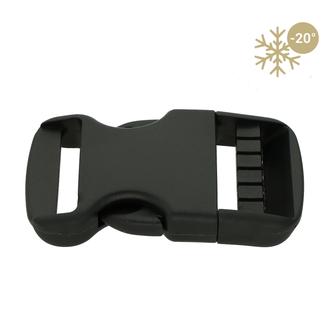
Width: 20–30 mm, Number of sizes: 3, Material: anti-freeze acetal, Breaking load: up to 95 kg, 50 pcs/pack, Price per pc
● In stock
from 0,255 € / pc
A plastic compound that the supplier classes in the acetal family (POM) and specifies for use down to −20 °C. Standard acetal keeps its toughness below freezing too. So the difference is that the supplier explicitly declares these buckles for frost, not a different class of material.
For side release buckles on working and sports collars that are worn in winter too, where the buckle can take a knock against frozen ground or ice.
Below −20 °C, test the finished product in real conditions first. For higher loads, choose a metal side release buckle, for example in 7075 alloy.
Rinse off mud, sand and salt with fresh water so that sand does not wear the buckle latch. The same applies after swimming in a chlorinated pool. Strong sun gradually dulls the surface. Before each winter, check the buckle for cracks.
Plastic conducts heat much worse than metal. At −15 °C a plastic buckle is just as cold as a metal one, but it draws heat from your fingers more slowly, so it does not feel as cold.
Price
Higher
A higher price class, typically associated with a particular material property, manufacturing method or finish. Check the other specifications to see what accounts for the difference.
Strength
Medium
Suitable for everyday products exposed to moderate loads. Repeated strong pulling may deform the material, so check the strength of the complete product for demanding uses.
Water
Seawater
Suitable for regular contact with seawater. Rinse the complete product after use if its other materials or components require it.
Weight
Very light
The lowest weight class in this comparison. Useful for small products and accessories where every gram matters.
| Allergy risk | No known contact allergen | No known contact allergen is listed for the material itself. Check the selected surface finish and the other components when making products for sensitive skin. |
|---|---|---|
| Aging | Minor changes | Over time slight dulling or minor surface changes may occur. This does not affect function, but is visible on closer inspection. |
| Maintenance | No special care | No special care is required. Rinse with water or wipe with a cloth when cleaning is needed. |