Width: 20 mm, Material: cotton + rubber, 50 m/pack, Price per m
● In stock
0,882 € / m
Material
Cotton webbing with woven-in rubber threads: soft in the hand, with the rubber adding grip. It absorbs water and dries slowly; let it dry fully before storing.
Prices include 21% VAT. More about VAT and customs fees.
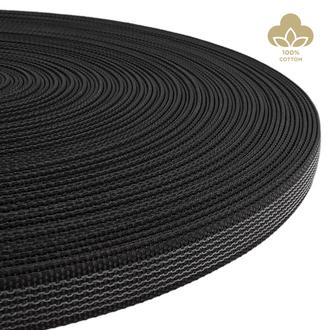
Width: 20 mm, Material: cotton + rubber, 50 m/pack, Price per m
● In stock
0,882 € / m
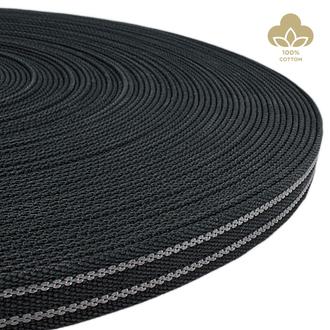
Width: 20 mm, Material: cotton + rubber, 50 m/pack, Price per m
● In stock
1,096 € / m
Cotton is a natural fibre from the seeds of the cotton plant, almost pure cellulose. Our cotton webbing has woven-in rubber threads: the cotton feels soft in the hand and the rubber on the surface adds grip. Webbing with rubber is not elastic; the rubber in it only improves the grip.
For training and tracking leashes that you hold in your hand for a long time. In the palm it feels softer than polypropylene with rubber, but it gets heavy when wet and dries more slowly.
For a dog that swims, frequent wet and mud, or items that stay outdoors, choose polypropylene with rubber or PVC-coated polyester. Cotton with rubber is the weakest webbing in our range, so for higher loads compare the maximum load of the specific webbing.
Dry a wet leash completely, uncoiled, before storing it. Cotton that stays damp for long goes mouldy and loses strength. Long exposure to sun weakens and fades cotton; rubber threads harden with heat, sun and age and can crack. Cotton can shrink in the wash, so wash it cold and air-dry it away from heat sources.
Wet cotton is not weaker than dry cotton; the risk is mould if it stays damp for long. Like almost any rubber, this rubber contains vulcanisation additives that are known contact allergens. And any cord that slides quickly through a bare palm can cause a friction burn. With a strong dog, gloves help.
Price
Lowest
The lowest price class in this comparison. Suited to larger production runs and projects where unit cost is a priority.
Strength
Low
Suitable for decorative elements, light accessories and light loads. May bend or break under a sharp jerk.
Water
Occasional fresh water
Tolerates occasional contact with fresh water, such as rain, puddles or brief immersion. Dry it afterwards to limit gradual changes to the material.
Weight
Very light
The lowest weight class in this comparison. Useful for small products and accessories where every gram matters.
| Allergy risk | Low contact-reaction risk | The material has a low risk of causing a contact reaction in normal use. Individual sensitivity varies, and the selected surface finish and other components also matter. |
|---|---|---|
| Aging | Degrades | Without protection, both function and appearance deteriorate over time. Typical signs include colour loss, embrittlement or cracking, a rougher surface, rust or white corrosion products. |
| Maintenance | Occasional cleaning | Wipe occasionally with a dry or slightly damp cloth. No specialist products or fixed care schedule are required. |