Length: 7–13 mm, Number of sizes: 6, Material: steel, 1000 pcs/pack, Price per pack
● In stock
from 14,06 € / pack
Surface finish
Rose gold gives hardware a fashionable pink-gold tone. As a thin galvanic layer it wears at contact points over time. Browse available rose gold variants.
Prices include 21% VAT. More about VAT and customs fees.
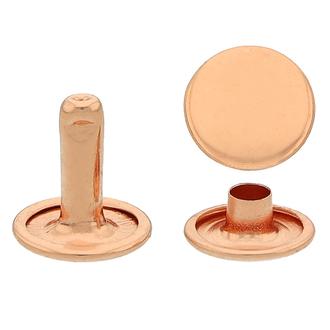
Length: 7–13 mm, Number of sizes: 6, Material: steel, 1000 pcs/pack, Price per pack
● In stock
from 14,06 € / pack
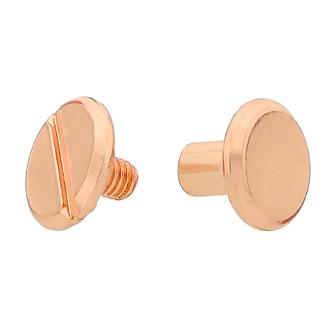
Length: 4–10 mm, Number of sizes: 11, Material: steel, 100 pcs/pack, Price per pack
● In stock
from 17,04 € / pack
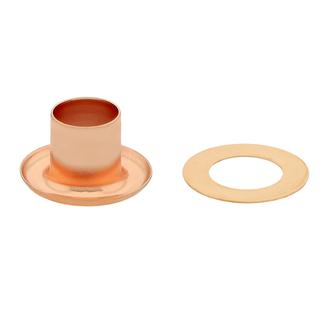
Eyelet height: 0.2–5.5 mm, Number of sizes: 2, Material: steel, 1000 pcs/pack, Price per pack
● In stock
from 3,07 € / pack
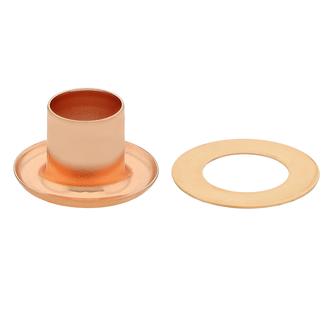
Eyelet height: 0.2–7 mm, Number of sizes: 2, Material: steel, 1000 pcs/pack, Price per pack
● In stock
from 4,77 € / pack
An electroplated layer of a gold-copper alloy: the copper gives it a pink tint. There's usually a nickel underlayer beneath.
A fashionable pinkish tone, distinct from classic gold or silver.
Fashion and women's collections, city wear. The thin layer wears through at contact points, so avoid damp. For everyday loads, choose a solid metal instead.
Like other thin decorative layers: edges lighten first.
Powder, white and grey tones, light leather.
Look
Rose gold
Pinkish gold tone with a copper tint. Distinct from classic yellow gold and suited to designs that use warm, muted colours.
Abrasion resistance
Low
Thin decorative coating that gradually wears through with regular wear and friction. Wear appears first where a buckle or snap contacts the strap, ring or fur.
Corrosion protection
Dry conditions
Provides a temporary barrier against moisture. Works well in dry environments, but protection weakens over time with regular contact with water or sweat.
Nickel
Yes, in interlayer
Nickel is present in an intermediate layer rather than at the surface. If the top layer wears through, nickel may become exposed and come into contact with skin.
Nickel release test (abrasion method PN 93 0021, AZL Otrokovice testing laboratory): pass, within the limit of 0.5 µg/cm² per week used by EU regulation. test report (PDF, in Czech)
| Damp conditions | Occasional rain | Tolerates occasional contact with rain, wet grass or damp hands. Regular soaking accelerates visible wear, so dry the surface after it becomes wet. |
|---|---|---|
| Aging | Wear at contact points | At points of regular friction (typically the buckle edge, snap contact point or strap) the finish gradually wears through and the base material shows beneath. |
| Process | Galvanic | Metal layer applied by electric current in a bath. An even, thin and well-adhered coating: the most widespread method for surface finishing of metal parts. |